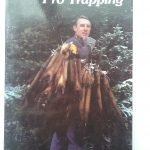
Seasonal Pro Trapping: A Review
April 30, 2009
Have you ever thought about becoming a professional trapper? Want to get away from the hustle and bustle of modern society and truly make a living off the land? How about moving all the way across the country to start your new career as a trapper?

Mike Lapinski did it, and lived to tell the story. His 1991 book, Seasonal Pro Trapping, explains why Lapinski left his career as an electrical engineer in New York and moved his family to northwest Montana to become a professional trapper. And it provides all the information you need to get started in your quest for a career in trapping.
Now don’t get too excited yet. As Mike explains in his book, there isn’t a whole lot of money in professional trapping, and you have to be frugal and productive in order to get by. This is even truer today, since fur prices aren’t any higher than they were back in the early 1990′s when this book was written. Added to that are the constant increases in cost of living expenses today. Becoming a pro trapper involves a significant tradeoff between income and job satisfaction. According to Lapinski, if you can afford to sacrifice the income, the job satisfaction is well worth it.
If you’ve come to the decision to become a pro trapper, this book gives an overview of the best states in which you can make a living trapping. Most of these are western states, with Alaska (of course) being on top of the list. It provides a few harvest statistics from some of these states, and different aspects that may appeal to, or deter, a prospective trapper. Perhaps the book could have expanded on this topic and provided much more content/state comparisons to allow the trapper to make a more informed decision. Instead, Lapinski spends about half a page highlighting each of the top states.
After this, the book goes on to explain the various methods of trapping and ways to trap each individual furbearer species. A couple of chapters focus on general trapping information and tips, and the remainder of the book provides tips, tricks and information on groups of species.
If you’re thinking about becoming a professional trapper, reading Seasonal Pro Trapping is a great place to start. Mike Lapinski does an excellent job in providing information to help in decisions related to this career, and explains methods, tips and tricks needed to trap the major furbearers. In a 150 page book, however, it’s impossible to describe the ins and outs of professional trapping. Seasonal Pro Trapping intends to be fairly comprehensive, but it will take a lot more reading, studying and actual experience in the field to work towards becoming a pro trapper. The book was an interesting, exciting read, and provides a great starting point for any active or prospective trapper.
You can purchase Seasonal Pro Trapping by clicking the advertisement link on the sidebar on the right side of this page. And as always, your comments on the book are welcome and appreciated.
Good trapping!
Washington Trapping Ban Continues to Impact Landowners
April 30, 2009
A number of states have banned trapping over the past two decades, and in virtually every instance, the loss of trapping has resulted in vast increases in problems with overpopulations of furbearers.
One such instance is taking place in the state of Washington, where trapping was banned in the year 2000. Two brothers on the Wilson Banner Ranch, a fruit orchard in Alpowa Creek, WA, are among many landowners who wish the law never was passed.
A combination of a large Snake River Dam and the 2000 trapping ban appear to have resulted in more beavers moving onto the orchard and destroying the valuable fruit trees the brothers rely on for their livelihood.
With the abolishment of sport trapping, they can’t find an affordable way to get rid of the beavers and protect their trees.
What Trapping Ban Would Cost Connecticut
April 20, 2009
Animal rights activists often state that banning wildlife management activities like trapping will have no impact on the economy. Such was the case when proponents of S.B. 994 (which, if passed, would have banned trapping in Connecticut) would have no economic impact in the state.
They were wrong.
Jeff Serena, over at the Connecticut Nature Examiner, reports on an assessment by the state Office of Fiscal Analysis that gives an estimate of the economic impact.
The predicted cost to the state in lost revenues is estimated at $15,464 per year due to the loss of trapping licenses through the Department of Environmental Protection (DEP).
plus,
The estimated cost to the state in additional expenses associated with nuisance-animal management is $482,000 in fiscal years 2010 and 2011.
and,
The estimated additional cost to Connecticut municipalities for nuisance-animal control is $92,000, as the services of volunteer trappers would no longer be available to Connecticut towns for the removal of problem beavers, and the towns would thus need to employ professional trapping companies.
So we’re looking at a total estimated economic impact of $589,464.00, or somewhere over half a million dollars just over the short term. And that doesn’t include any estimates of property damage resulting from flooding of roads and other infrastructure, damage to dikes and levees, spread of disease, loss of household pets from coyote predation, and trees lost due to beavers.
It’s quite obvious that banning trapping in Connecticut wouldn’t only take away the rights of law abiding citizens who harvest a renewable natural resource, but it would have a significant economic impact on the taxpayers and property owners of the state as well.
The bill was recently killed in the legislature. Let’s hope it isn’t revived any time soon.
Ban on Trapping Fails in Connecticut
April 18, 2009
Great news, trappers! Word has it that Connecticut’s Senate Bill 994, which would have essentially outlawed trapping in Connecticut, has failed to pass the Senate Judiciary Committee. For now, the bill is dead, meaning that trapping can continue under the existing regulations administered by the Connecticut DNR.
Efforts from Connecticut trappers, as well as trappers from all over the country were crucial in keeping this bill from passing. Trappers, property owners and wildlife control officers flooded legislators with phone calls, email messages and other public comments. Because of this effort, lawmakers were better enlightened about the serious impacts of passing this bill.
This bill was similar to one passed in Massachusetts, where furbearer populations have increased well beyond their carrying capacity with no resources available to properly manage them. Trapping is an important wildlife management tool that doesn’t cost the state money – in fact, trappers pay license fees that promote wildlife research and management oversight.
It’s important that Connecticut outdoors folks and rural landowners continue to promote responsible trapping and ensure its future. Animal rights groups and their sympathizers will continue to introduce similar bills that threaten the future of trapping. And it’s still possible for a lawmaker to ammend this bill and attach it to another bill sometime soon.
Here at Trapping Today, I’ll do my best to keep you updated on future attackes to our trapping rights. Until then, many thanks go out to the Connecticut Trappers Association, Connecticut DEP (Wildlife Division), and the many other trappers and wildlife control officers that worked so hard in opposing this bill.
Maine Lynx Lawsuit Postponed
April 18, 2009
After four days in court, the lawsuit to ban certain types of trapping in Maine has been postponed until later this summer.
After hearing testimony from environmentalists and representatives from the state of Maine for four days, prior commitments by the judge required that the case be finished over a couple of days sometime this summer.
Stay tuned for more updates when this case resumes, and remember to support the Maine Trappers Association, U.S. Sportsman’s Association, and the National Trappers Association. These groups are working hard to protect the rights of trappers in Maine and throughout the United States.
Activists Bring Out Their ‘Expert’ in Lynx Lawsuit
April 15, 2009
Trapping in northern Maine is under fire yet again, this time with the re-emergence of the Canada lynx lawsuit that rocked the trapping community this past fall and winter.

Yesterday in Bangor, federal judge John Woodcock heard testimony in the lawsuit filed by two animal rights groups in an attempt to virtually put an end to trapping in its current form in northern Maine.
In the hearing, the plaintiffs had the opportunity to call their first witness to the stand. They questioned a self-proclaimed “lynx expert” by the name of Paul Paquet, who claimed that recreational trapping can pose a threat to lynx populations:
“This is a fragile population, and any mortality or injuries that can exacerbate … the decline threatens the population,”
Paquet also mentioned that:
Maine’s population of an estimated 500 lynx is too small to be considered viable.
Unfortunately for the animal rights groups that are relying on Paquet as their ‘expert biologist’, however, Paquet completely failed to mention that Maine’s estimated 500 lynx do not act as an isolated population. They are connected to a much larger, healthy population that is only separated by a political line known as the U.S. – Canadian border.
The lynx population certainly is viable, and where I come from, withholding such obvious and important information is considered lying.
If Paquet had to lie yesterday when answering such easy questions about Maine’s lynx population, I’m really interested in hearing how he squirmed in today’s hearing, where he was supposed to be cross-examined by the state’s attorneys.
Considering his apparent importance to the plaintiffs in this case, you might be wondering who Paul Paquet is, and how much of an expert he really is. Certainly if the animal rights groups have such strong science and factual basis for their claims, they could get the best experts around to testify for them. From what I can tell, Paquet is a ‘self-employed researcher with affiliations to universities across Canada’.
A self-employed researcher? I seem to have run into a few of these in the past. In my experience, this usually means the individual is an animal lover with extreme views, who often caters to the animal rights groups, who usually pay a significant portion of his salary. Hmmmmm…….. I’m not saying Paquet is such a person……I wouldn’t want to judge him, but it sure makes you wonder.
A quick google search brings up a bit of interesting information about Paquet. Want some background on this guy’s expertise? Check out the following:
Jury Reviews Evidence and Determines Wolf Killed Young Ontario Man
The self professed wolf expert, Dr. Paul Paquet, that strung this court along and the Carnegie family along with is incorrect “expert”. This important public safety information has been delayed for over 2 years due to his lies in trying to rewrite what the evidence and eye witnesses clearly saw. This was not only a miscarriage of justice to the family but put public safety at risk.
I recommend that all data, science and studies reviewed or authored by Dr. Paul Paquet shall be removed from the records of the wolf program and all his information shall be researched again by an independent source. If this man cannot properly identify a bear or wolf track or even clearly review a mountain of evidence pointing to wolves, what other misinformation has he perpetuated on the current wolf science?
Something to think about. It isn’t Mr. Paquet’s first time testifying in court.
Check out the Bangor Daily article on today’s hearing. Be sure to read the comments section at the bottom of the page. There are certainly some interesting viewpoints! The article also mentioned that about 20 trappers showed up to the trial, while only 2 people were there to represent the Defenders of Wildlife and Wildlife Alliance of Maine. It’s amazing how much trouble can be caused by deep pockets and a few vocal activists.
The trial is expected to last until Thursday. Myself and other trappers are hoping that common sense and REAL SCIENCE are represented throughout the remainder of the trial, and responsible trapping is allowed to continue in northern Maine.
Ontario Trapping Restrictions: Based on Science?
April 3, 2009
Recent hunting and trapping restrictions have hindered many Ontario, Canada residents near Algonquin National Park. Some argue that the decision to restrict these activities (particularly the pursuit of wolves and coyotes) in areas around the Park is based on scientific research, but opponents claim that the research is terribly flawed.
Huntsville, Ontario resident Ron Stinson wrote a convincing rebuttal to the new restrictions in the Huntsville Forester. Hopefully his letter sheds some light on the subject, and encourages others to look deeper into the science behind the restrictions.
NAFA’s Latest Fur Market Update
April 2, 2009
North American Fur Auctions posted another wild fur market update in anticipation of their May fur sale. As expected, the auction house appears to be having a difficult time finding enough buyers to bid on all of the fur they have in storage. World events over the next month will undoubtedly influence buyer behavior at the May sale. But for now, it doesn’t appear as though fur prices will be getting any better any time soon.
Read the NAFA Market Update here.
In Pursuit of a Problem Beaver
April 1, 2009
My neighbor down the road had a problem. A beaver problem. I’d seen this type of problem before. A beaver had moved into his complex of farm ponds from a nearby stream and decided to make his winter home there.
It was late fall, and this big rodent wasn’t wasting any time getting ready for winter. The first objective was to build a home, which was accomplished by burrowing a tunnel and hollowing out a home under an island in one of the small riverside ponds. After home was built, it was then time to establish a food base by doing what beavers do best: cutting down trees.
The tree cutting, in addition to plugging up the pond drain, was the main reason the landowner had asked me to take a look at the situation. Sure enough, the pretty aspen trees that surrounded the pond were, one by one, becoming victim to this toothy engineer.
Since trapping season hadn’t yet begun, I spent my first visit to the site wrapping the remaining trees with chicken wire. While the landowner had lost a number of cottonwoods to the appetite of castor canadensis, we were able to save a number of the remaining trees. Now, if he decided to try cutting down the remaining trees, Mr. Beaver would have to chew through 16 gauge wire.
On opening day, I started up the truck and headed down the road. I was loaded down with all of the necessities of beaver trapping, including 330 conibears, drowning rigs, cable snares, steel stakes, conibear setters; basically every imaginable thing Average Joe trapper might need, and a little more.
I’d scouted out all of the beaver’s travel routes during my initial visits, and knew where I wanted to set traps once the season began. So that morning, it didn’t take long to get four 330 conibears set up in travelways among the farm ponds, and between the ponds and the river. I set up quickly that morning and headed off to work. I was confident that I’d find that beaver in one of my traps the next morning.
Four conibears, but five trails. That’s what I found out when I illuminated the previous night’s sets during my first check. That gosh darn beaver had avoided all of my sets! He had moved, though. A trail that had been seldom used before now appeared like a major travelway. It appeared as though the beaver had noticed the conibears and decided to avoid them.
I decided to keep the sets as they were and wait another day.
Next morning, I checked traps that hadn’t moved. It was obvious that this beaver knew what was going on, and had avoided my sets again. No problem. I needed to make some new sets.
Instead of conibears, it was time to try something new. I pulled a couple of snares out of the truck and started to set them up. Two 3/32″ cable snares were hung two inches off the ground over trails that the problem beaver had recently used. The conibears stayed where they were, and I waited another day.
On the third morning, I arrived at the ponds with great anticipation, but a bit of doubt resulting from two unsuccessful days of pursuit. I neared my traps, shone the spotlight around, and saw movement. There he was! The problem beaver was caught in one of the snare sets.
I quickly dispatched the beaver and visited the landowner to display my bounty. He was happy to be rid of the animal that was cutting down all of his trees, and I had a new valuable pelt to skin, flesh, stretch, and sell in the fur market. I had also learned a bit more about beaver trapping. When you’re going after problem beavers and conibears aren’t quite working, try setting a few snares. You may be pleasantly surprised with the results.
Good trapping!
Connecticut Trapping Info
April 1, 2009
With the coming threat of a trapping ban in Connecticut, it may be useful to learn a bit more about trapping in the state.
Jeff Serena, of the Connecticut Nature Examiner, provides a great summary of fur trapping in Connecticut.


Comments