Top

FHA Fur Auction Results Positive for Trappers

January 28, 2010

Despite a serious downturn in the wild fur market as of late, the most recent Fur Harvesters Auction Inc. fur sale posted some pretty encouraging results.  Fur prices were still pretty low for some species, but others were impressive.  Beaver averages were pretty low.  Some raccoons did okay, while others didn’t sell at all.  Muskrat prices were very impressive, averaging almost $7.50!  Coyote and red fox actually sold pretty well.

You can see all of the fur sale results by clicking here.

Remember, this was a relatively small auction featuring mostly high quality northern furs.  Still, it indicates to me that fur prices may be on their way to recovery.

The next FHA sale will be held on February 19th, followed by the big NAFA sale in March.  It will be interesting to see what the future holds for wild fur prices.

Kirk DeKalb’s Trappin’ Tales Video: A Review
January 23, 2010

The trapping world is full of videos.  Videos on how to catch bobcats, coyotes, beaver, you name it.  In a sport and lifestyle where many young enthusiasts are thirsting for specific “how-to” information, trapping instructional videos abound.  And I enjoy them.  It’s nice to watch a meaningful video and pick up a few pointers here and there.  But for the longest time, I’ve been searching for trapping videos that really entertain.  I’m always looking for the trapping video that I can enjoy sitting down to when I’m not particularly interested in watching specific instructions.  Believe me, these videos are hard to find.  Mike Lapinski put together Wilderness Trapping, which really fit the bill, but the video is over a decade old!  In between watching old tapes from Lapinski and others I’m constantly looking for a fun trapping video with high entertainment value.  In Kirk DeKalb’s “Trappin’ Tales”, I finally found just the trapping video I was looking for.

Kirk DeKalb is arguably the top beaver trapper in North America.  Working in Georgia, DeKalb consistently traps around 1,000 beaver each year, along with a hefty pile of otters.  After eleven years of animal damage control work, DeKalb decided to begin sharing his knowledge and experiences with others through video, and brought in a professional videographer to spend a week on his trapline and record his experiences.

Trappin’ Tales is the result of a week on the beaver and otter trapline with Kirk DeKalb, compressed down to just over two hours of footage.  The video follows Kirk to his individual sets and shows lots and lots of catches.  I mean lots.  The man pulls 89 beaver and 16 otter out of Georgia’s wetlands in an average week.

Trappin’ Tales starts out with Kirk in an interview setting, talking about the video and what he hopes to accomplish.  The main point he gets across here is that he wants to entertain.  Unlike most trapping videos, which are primarily instructional, this one is more of a show-and-tell.  You’ll follow along on the trapline and experience a week in DeKalb’s world.

Day One on the line starts off really quick.  Almost immediately, Kirk is slogging through the water and pulling beaver out of traps.  The main focuses here are set location and getting a high volume of sets out.  Many small details are not discussed, likely in the interest of keeping the video fast-paced and entertaining.  Even though he didn’t spend a huge amount of time on the details, I did pick up a few valuable tips on set types and locations.  I was particularly interested in the way DeKalb stabilizes his traps and places them in areas that I might have overlooked.  I was also treated with an interesting story about a mean water moccasin on the trapline!   At the end of Day One, Kirk has pulled in 12 beavers and an otter.

On Day Two, we get to see Kirk catch a beaver in a drowning rig that he showed how to set up the day before, and also hear a funny story about alligators.  I start noticing a pattern in the way Kirk sets most of his beaver traps and think about how I might incorporate this in my beaver trapping.  There isn’t much time to daydream, though, because the next thing I know Kirk is pulling more beavers out of the water and talking about alligators.  There’s also an interesting catch of white-bellied beavers, a true rarity!  A rain storm hits, which should make the beaver more active.  A short Day Two ends with 11 beavers and an otter in the back of the pickup truck.

On Day Three, Kirk talks about the impact of temperature on beaver activity and about beaver being stolen or partially eaten by bobcats.  We see lots more trapped beaver, and hear a story about how DeKalb broke his ribs and hand, and kept on trapping.  The day ends with 14 beaver in the truck.

By Day Four, I’m enjoying following Kirk back to the same locations and catching critters day after day.  This is especially interesting when they’re caught in locations where he made new sets earlier in the week.  Kirk discusses in detail the destruction that beavers are causing to valuable cropland and infrastructure in the area he traps.  I certainly appreciate this view, but it may be a bit conflicting to those who view beavers as a valuable furbearer and not so much as a nuisance.  In Georgia, beaver pelts are worth very little.  The main motivation for trapping beaver in DeKalb’s area is to prevent and eliminate the widespread damage they cause.  Kirk really enjoys his job and feels strongly about controlling beaver numbers so that beavers and humans can co-exist without too much conflict.  At the end of Day Four, the truck is loaded down with 15 beavers and 2 otters.

Trappin’ Tales ends with DeKalb discussing his love for trapping and the different aspects of being on the trapline.  He truly does love what he’s doing, as you can tell by watching him on the line.  Overall, the video turned out to be extremely entertaining, and I picked up a few pointers along the way.  All of my trapping experiences have come from the northern U.S., so it was interesting to see the way things are done down South.  It was also interesting hearing stories about water moccasins and alligators, dangers that I would never encounter on the trapline.  The white-bellied beavers were a bonus as well.

The video quality of Trappin’ Tales was second to none.  Picture quality is the best I’ve seen in a trapping video thus far.  The soundtrack was also great.  It was a real catchy tune that went well with the overall theme.

The DVD also contains two special features.  One is an interview with DeKalb where he talks about what it takes to catch large numbers of beaver.  He talks about the various aspects of ensuring that your trapline produces a profit.  There are interesting tips here that can really help a motivated trapper.  The second feature is a video of Kirk’s son, Taylor, skinning a beaver in less than two and a half minutes!  This is something you have to see to believe.  The kid is fast!  Taylor pays his way through college with the money he makes from trapping.  Kirk is obviously very proud of his son, and has passed on a great tradition and skill through him.

Overall, I feel that Trappin’ Tales is well worth the purchase.  If you’re tired of all the run-of-the-mill instructional videos out there and want a trapping video that will really entertain you, try this one.  You won’t regret it.

You can watch a video preview of Trappin’ Tales by clicking here, and can purchase the video at www.trappintales.com.

Foothold Traps are Humane, Columnist Demonstrates

January 9, 2010

The best way to combat animal rights arguments is with the facts.  Massachusetts outdoor columnist Marc Folco did just that when he demonstrated, on video, what it’s like to get your hand caught in the average foothold animal trap.  Folco showed the public what most trappers already know: these traps are humane!

The same traps demonstrated in the video below were banned in Massachusetts years ago by uneducated voters in a statewide referendum.

Click here to read the full story.

Trapper’s Post: An Interview with Bob Noonan
January 2, 2010

Trappers-Post-cover

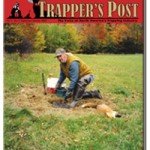
This season, a brand new magazine has entered the ranks of those dedicated to North America’s trapping industry.  Trapper’s Post, a bimonthly publication focused on all things trapping, printed its first issue in September and has already begun to develop a strong readership in the trapping community.  After reading the first two issues of Trapper’s Post, I was pleasantly surprised by the large amount of practical trapping information included in its 44+ pages.  In addition to being loaded with great content, the layout and design of the magazine was very refreshing and made it easy to read.  Overall, I was impressed and wanted to learn more about Trapper’s Post, so I requested an interview with publisher and editor Bob Noonan.

A lifelong trapper, Noonan has been a freelance writer for decades and has written countless articles for trapping publications including Fur-Fish-Game, Trapper and Predator Caller and International Trapper.  He has also been the editor of Wildlife Control Technology for 15 years.  After developing numerous connections in the trapping industry, Noonan began to see opportunities to share more trapping information than was currently available in today’s media.  It was this abundance of story ideas and encouragement from other trappers helped Noonan and his wife Debbie decide to start Trapper’s Post.

bobnoonan_picDuring tough economic times and a low point in the fur industry, you might be wondering why anyone would decide to start a new trapping magazine.  Either they’re downright crazy, or truly see an opportunity where few others have been looking.  One late December day, I had the chance to talk with Bob Noonan to find out more.

TrappingToday:  Can you tell us about your background as a writer for trapping publications, and what prompted you to start Trapper’s Post?

Bob Noonan: I’ve been writing for the trapping industry for over 25 years.  I started doing cartoons for the Trapper magazine in the 1970s, and began writing articles for them in the ‘80s.  In the mid-1980s I became a field editor and contributed stories until recently.  I was a freelance magazine writer for publications in other fields, but my real passion was writing about trapping.  Unfortunately, it wasn’t possible to make a living writing trapping articles.

Throughout my writing career, I had the opportunity to meet lots of people in the trapping community and came up with a lot of ideas.  I always had more ideas for articles than I could sell to the trapping publications.  I also discovered a great deal of information that never gets written about.  Since I loved writing about trapping and had all of these ideas, why not start a magazine?  It was a great way to justify writing about trapping for a living.

TT:  How is Trapper’s Post different from other trapping magazines?

Noonan: We publish, and will continue to search for, information from real experts who have never before been in print.  Due to time constraints, other magazines usually work with trappers who are also writers.  I have the time and resources to work with articles from very knowledgeable trappers who aren’t necessarily great at writing.

TT:  I noticed that Trapper’s Post is loaded with content, as opposed to many publications that are loaded with advertisements.  Do you plan to continue this pattern?

Noonan: While we are just getting started and would like to increase our advertising, Trapper’s Post will never have as many ads per page as many other publications.  Some publications have ad ratios (ratio of advertisements to editorial content) of up to 50% or more.  Our current ad ratio is about 20%, and we’d like to eventually get that to around 30%.  You need advertisements in order to make money, and advertisements do provide readers with access to products, but when you get too many ads you have to break up articles more to fit them in, and readers begin to balk.

TT:  Many nationally known trappers are featured on the pages of Trapper’s Post.  How have you been able to make the connections necessary to bring these folks aboard, and do you plan on recruiting others to the ranks?

Noonan: It took a long time.  I went to a lot of state and national trapper conventions and got the chance to meet many other trappers and folks around the industry.  My favorite type of article to do is the interview, which doesn’t seem to be very common among other writers.  While writing for the Trapper and Predator Caller, the editors and I would brainstorm and come up with ideas, which often led to assignments to interview a particular trapper, usually a well-known one.  Whether it was by phone or in person, I made friends by doing these interviews, and they introduced me to other expert trappers not known to the public.  In Trapper’s Post I want to introduce these people to the public.  After you’ve been around the industry long enough and keep networking, it’s amazing how many connections you have, and how small the trapping community really is.

TT:  Do you have any special advice for those wishing to contribute to Trapper’s Post?

Noonan: First, before writing anything, contact me.  Otherwise, you might spend time writing an article similar to one that I already have in hand.  You can call or email, but phone is probably better.  That way we can toss around ideas.  I love to talk trapping, and we can probably identify and focus an idea for an article based on our conversation.

Second, this is not a literary magazine.  Perfect writing skills aren’t needed.  I want information, period.  Don’t be intimidated if you’re not a good writer, there is so much valuable information in the trapping community that is being lost because it isn’t written about.  Just relax and get the information written down.  I will take care of the editing.

TT:  What should we look for from Trapper’s Post in the future?

Noonan: Overall, we want to make the North American trapper more aware of his community.  That’s why we chose our slogan, “The Pulse of the Trapping Industry”.  We want to be an organ for communication between trappers by striving for the same thing that has made Trapperman.com so popular, that sense of community.

We also want to preserve and protect our trapping heritage.  One way to do that is recruit new young trappers.  In future issues we’ll have a regular Young Trapper section, which will include a story by a trapper 16 or younger, and a short instructional article for beginners.  We have provided free subscriptions to six local school libraries already, and they have been well received.  We will work to expand this outreach to school libraries here in Maine and in other states.  We want to keep growing and be a voice for the trapping community.

We are constantly searching for valuable trapping information to grow and preserve trapping knowledge.  Trapper’s Post will always have very specific, time tested, practical information from trappers who have done it before.  We will continue working to offset the urban culture that has caused people to lose touch with their roots, and help strengthen the fraternity of trappers in North America.

You can subscribe to Trapper’s Post by visiting www.trapperspost.com.

Comments

Bottom