Top

Ancient Hudson’s Bay Company Film to be Restored

January 25, 2012

The Hudson’s Bay Company is, undoubtedly, the most historic and influential company in the history of the fur trade.  Through the remarkable effort of a few dedicated folks, a historic film of some of the Company’s history in Canada is being resurrected.  Here’s some background from the folks at Return of the Far Fur Country.

In 1919, the Hudson’s Bay Company was approaching its 250th year in business. What began in a coffee house in London, in 1670, had now grown to become the undisputed leader of the international fur trade.
For their landmark 250th birthday, the HBC spared no cost. A written history of the company was released, with a gramophone recording of that history. They commissioned The Beaver magazine, to actively chronicle the company’s workings in the North—The Beaver would become the oldest and most important history magazine in the country, only recently changing its name to Canada’s History. As well as publications, celebrations were planned across Canada, and in London.
The biggest gathering was slated for Winnipeg, the company’s Canadian headquarters. The main ticket item would be the release of a feature film that depicted the Hudson’s Bay Company history, as well as its current activities across Canada’s North. To accomplish the task of filming the North, the Company bought a film company in New York, and made plans for a crew to head to Canada. The film would be called The Romance of the Far Fur Country.

While the film was shown throughout the developed world in 1920, it soon became obscured amongst other concerns:

By the end of the 1920s, audiences were turning their attention to the talkies, wanting more than just moving pictures. Soon after the Great Depression hit in the 1930s, barely a decade after The Romance of the Far Fur Country was filmed, the footage from the epic Hudson’s Bay Company film disappeared from public view, the canisters of nitrate film stock were packed away by the HBC in an archive in London for safe keeping— but lost to the world.

This new project is working to restore the long-lost film and return it to folks in Canada and the rest of the world.

Return of the Far Fur Country is all about putting what is perhaps the most important record of northern Canadian life, back on the screen.
Unbeknownst to the filmmakers in 1919, their footage has become an extraordinary time-capsule, a moving history of how Canada has developed as a nation. That is why the goal of the project is not only to bring the film back to Canada, but to bring it back to the very communities where it was shot.
This return to local communities will be held in town-hall screenings to provide a place for local people to view their ancestors on film, tell stories of how the country has changed, and help name the people and places that appear in the film.
This very unique tour will go not only to cities like Montreal, Winnipeg and Victoria—places that feature in the HBC film—it’s also going back to some of the most remote locations in Canada. The tour includes Northern Alberta, Nunuvut, Alert Bay off Vancouver Island, and Northern Ontario.

I think it’s great that an important piece of fur trapping history is being brought back to life through restoration of the original film.

Click here for a video preview of the film.

Click here to visit the film’s website.

North Dakota Trapper Targets Muskrats

January 24, 2012

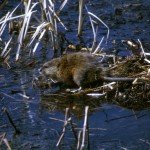
Muskrat trapping is a lot of fun.  And it’s becoming more rewarding with increasing pelt prices over the past couple of years.  But for most trappers, the experience trumps the financial considerations of trapping.

Nat Bornsen is a North Dakota trapper who targets muskrats.

Click here to read Nat’s story.

Fox Fur Prices May Encourage NWT Trappers

January 23, 2012

Recent record-high prices for fox pelts may cause more trappers in Northwest Territories (Canada) and beyond to target fox in their operations.  Here’s an excerpt from a CTV News article that reports on the high prices:

The Northwest Territories government is hoping record prices for fox fur pelts will encourage northern trappers to target the critters and keep a check on the burgeoning population.The price doubled at a recent auction in North Bay, Ont., with cross fox pelts going for $100, more than triple the average price. White fox pelts went for $200 — up from $40 in previous years.

Francois Rossouw, with the territory’s Industry Department, said that kind of price for fox is unheard of.

“We really hope the prices will get people targeting foxes,” Rossouw said. “Every community in the North has their own resident fox it seems. Instead of having problem wildlife, we would prefer to have them harvest the foxes humanely and pelt them up properly and put them into the market.”

Fur has garnered above-average prices this year compared to years past, Rossouw said. Wild fox is particularly in demand from Chinese buyers.

You can click here to read the full article.

Fur Market Article from NAFA

January 13, 2012

Fur pelts command record-high prices, The Star Article

John Goddard-Business Reporter

Fur prices continue to hit last year’s record-high prices at this season’s first European auctions — good news for Canadian trappers, mink farmers and fur-clothing manufacturers.

“The number of customers exceeded all expectations,” the world’s biggest fur auction house Kopenhagen Fur said of its opener two weeks ago. Helsinki’s first auction met similarly high demand. The trend springs from three positive industry developments, says Alan Herscovici, executive vice-president of the Montreal-based Fur Council of Canada. Design innovation, the opening of vast Asian markets, and the fur industry’s progress in articulating its side of the ethical debate have coincided, he said this week in a wide-ranging interview.

Q: What are auction houses getting for fur?

A: Farmed mink is the industry benchmark. There are probably 50 million mink skins a year produced globally. Canada produces a little less than 3 million. In the late 1980s, the last time fur prices were so strong, the average mink pelt— averaging the many qualities, types and colours — brought close to $50 (U.S.) In the economic downturn of 1992, mink prices fell as low as $20. In the last couple of years, not only have prices come back but have actually gone past those levels. Last year, the overall average was well over $65. Some mink pelts brought more than $100.

Q: What does that mean for Canadian fur?

A: In 2010, the last year we have complete figures for, total fur exports — pelts and garments — brought more than $450 million. That’s up 36 per cent from the year before, more than a third, from $331 million. In the recession of 1992, the figure was $143 million.

Q: What accounts for today’s high demand?

A: Several things. One: We have seen totally new markets open up, such as northern China, with its new middle class. Imagine The Bay store in downtown Toronto, the whole store just fur boutiques. There are towns in northern China with several of those. It’s hard to believe. China has become one of the biggest consumers of furs and one of the biggest manufacturers of furs, too. Fur manufacturing is labour-intensive and China has low labour costs. China has taken over most of the world’s manufacturing and centres such as New York, Montreal, Milan and Frankfurt have been seriously reduced. Markets are also opening up in Korea, where there is a strong fashion industry, and even places like Kazakhstan and Mongolia. Also, Russia, where people have always loved fur, has become a major importer of finished fur products.

Q: What is another reason?

A: Technical and design innovation. Fur is much more lightweight now. It’s done by micro-shearing the fur, by making the leather thinner and often by making the furs reversible, with a leather side. You don’t have the inner linings of old-fashioned coats, which is what people are looking for because people are dressing sportier, in modern, technical materials that are lighter and a lot less bulky. Sheared mink is a very strong trend.

Q: Are Canadian furriers developing new designs as well?

A: Yes. The Fur Council has created the brand “Beautifully Canadian,” with the website www.beautifullycanadian.com, to promote contemporary Canadian design internationally. We’re seeing a lot of sheared mink, sheared other furs, and now with accents of big long-hair collars — fox, coyote or beaver.

Q: Haven’t animal-rights campaigns tainted fur for European and North American consumers?

A: Ethics are important not only for Europe and North America but for Russia and Asia as well. To put in a plug for the Canadian fur industry, we have some of world’s best regulated, best managed, ecologically sustainable, humane trapping and farming practices, and we’re doing a better job of telling our side of the story.

Q: What is your side of the story?

A: The World Conservation Union, the World Wildlife Fund, all the major conservation and environmental groups today promote sustainable use of wildlife and animals as a renewable, natural resource. They recognize that humane practices are respected and realize that these PETA (People for the Ethical Treatment of Animals) are totally anti-ecological.

Q: How do you mean “anti-ecological?”

A: It is ironic that we talk today so much about “green” and protecting the planet, yet we have never been less ecological in terms of clothing. We wear clothes that are inexpensive, nice-looking, trendy and thrown away after a couple of seasons, and 80 per cent of this cheap clothing is synthetic. They are like plastic bags. We’ve cut down on plastic bags but hundreds of millions of metric tonnes are thrown in the trash every year with no recycling program. Fur lasts a long time and at the end of its life it is biodegradable. The fur industry is well regulated, it is sustainable and it is totally in sync with modern environmental thinking.

Early 2012 Fur Market Report

January 11, 2012

Two recent fur sales gave us a great indicator of what to expect for fur prices in 2012.  On January 7th, Fur Harvesters Auction Inc. held its first fur sale of the year.  The sale went extremely well, with high averages for most species. Click here to read the FHA auction report.

Here’s a recap of the prices:

Fur Harvesters Auction, Inc.  January 7, 2012 fur sale averages:

Beaver – $7.03-33.85 (most $18.42-33.85)

Mink – $20.87

Otter – $82.15

Muskrat – $8.72

Fisher – $38.00-$57.47

Raccoon – $13.31-$18.89

Red Fox – $26.64-53.43

Grey Fox – $24.32

Skunk – $2.51

Coyote – $63.30-$68.77

Wolverine – $222.35

Wolf – $125.31-$403.94

Weasel – $3.56

Additionally, North American Fur Auctions held a private treaty fur sale on January 10, 2012 that reaffirmed the elevated fur prices.

Click here for the NAFA Report.

Here’s an overview of those results:

January 2012 Private Treaty Sale

Sale of Muskrat Exceeds Expectation
January 10, 2012

NAFA held a Private Treaty Sale over this past weekend which included nearly 100,000 fresh Muskrats as well as a selected offering of Coyotes, Beaver and Raccoon.

Muskrats sold 100% at very high prices with Section I averaging $9.03. The better qualities were sold in line with our record-breaking May 2011 sale.

Coyotes sold 100% at increased prices with a limited collection trimming coyote averaging $70.47, reflecting very strong demand from the North American trim trade.

Beavers sold 100% at sharply increased prices, reflecting a better understanding of this article from China, which now recognizes it is priced very attractively in either square centimeters or square inches. Overall Eastern larger sizes averaged $41.17 with Westerns at $37.03.

The limited offering of Raccoon was not large enough to attract sufficient buying power and was mostly withdrawn. To achieve success, this article needs a larger attendance and more participation from major overseas markets, which will be well represented in our February auction.

NAFA’s senior management is currently travelling to the major international markets and we are expecting a very large attendance for our February sale.

The results of these auctions bode well for the fur market in the next several months.  Let’s hope the trend continues!

Trapping Today News Roundup: 1/8/2012

January 8, 2012

With plenty of trapping-related stories in the news lately, I thought I’d take the opportunity to give you a sample of what’s out there.  You can click on the links below to read these news stories.

River Otters Returning to northwest Ohio – For the first time in over 100 years, wildlife officials have confirmed a river otter in Putnam County, Ohio.  The recovery and continuing spread of the state’s river otter population is a trend also seen in numerous other states.

Fur trapping remains important part of northwest Ohio’s economy – This story highlights the diminished, but still important, fur market economy in northwest Ohio.  Area wildlife official Jim Schott provides valuable information on the area’s trapping, past and present.

Southwest Missouri Trapper Catches Mountain Lion – A trapper recently caught and released a mountain lion in Reynolds County, Missouri.  The story comes on the heels of numerous reports of mountain lion sightings in that part of Missouri. Could the big cats be expanding their range?

Young Missouri Trapper Works Hard, Makes Big Catches – 17 7ear old Wacey Lathers is already a more accomplished fur trapper than many folks over twice his age.  The kid has been trapping since he was 11.  He works hard, makes big catches, and loves the time he can spend outdoors before and after school.

Trapper Provides Tips on Spring Beaver Trapping – Bruce “Buckshot” Hemming recently wrote an article in “The Survivalist Blog” that provides some great information on spring beaver trapping.  He explains the basics of trapping beavers with footholds, conibears and snares.


Minnesota Ponders Wolf Hunting, Trapping Seasons

January 5, 2012

After a successful recovery of the gray wolf population in the Great Lakes area, wolves have been removed from the Endangered Species List by the U.S. Fish and Wildlife Service.  With delisting, management of the wolf population becomes the responsibility of each state’s fish and wildlife department.

The Minnesota Department of Natural Resources is considering opening a wolf hunt to reduce the wolf population, but hunting success for the species is questionable.  A recent article in the Star Tribune highlights statistics from the recent wolf hunts in Idaho and Montana, which show that hunters have had difficulty harvesting wolves.

Another wolf management option for the department would be to allow wolf trapping.  Doug Smith’s recent article further discusses this option.

Minnesota trappers could be more effective in killing wolves than hunters.

At least initially.

But there may not be much of a market for Minnesota’s wolf pelts, and it’s uncertain how much interest Minnesota’s 6,000 trappers will have.

Click here to read the full article.

Market for Muskrats Gains Attention

January 4, 2012

The Wall Street Journal just posted an interesting article on the recent rise in demand and prices for muskrat furs.  They took the time to interview several trappers and relay their thoughts on the muskrat market, as well as the fur market in general.

The North American muskrat market has been booming, thanks to soaring purchases by Chinese and other newly rich nations that need muskrat fur to line coats and footwear.

muskratnew

Joel Millman/The Wall Street JournalTrappers Dennis Gast and Alan Kamarainen examine an otter skin.

Specifically, they want muskrat bellies, the felt-like fur that is practically impermeable to moisture. At $10 per pelt—five times what muskrats fetched in the 1990s—pelts were trading at new highs when bidding for last season’s furs ended in June.

But some in the belly trade are casting worried glances at Europe, where fur sales are expected to be soft this winter. That could drag prices down for trappers here, and the current muskrat mania could prove to be a belly flop.

Click here to read the full article.

U.S. Fish and Wildlife Reviewing Maine’s ITP Application for Trapping and Lynx

January 2, 2012

The U.S. Fish and Wildlife Service is currently considering an application by the Maine Department of Inland Fisheries and Wildlife for an incidental take permit for Canada lynx.  The ITP would provide legal protection for the Department’s trapping program and trappers who incidentally capture lynx, which are protected under the Federal Endangered Species Act.  In return, the Department has taken measures to minimize the chances that lynx will be taken in traps, and minimize mortality to lynx that are caught.  For the few possible mortalities that could occur, the Department has agreed to provide mitigation to minimize impacts to the lynx population.

The ITP comes on the heels of several lawsuits from animal rights groups to attempt to limit trapping in Maine.

If issued, the Incidental Take Permit would last for a 15 year period.

A brief review of what the document means to Maine’s trapping program can be read by clicking here.

Click here to read the full ITP document.

The USFWS Draft EA can be found here.

The USFWS is accepting public comment on the ITP application through February 7, 2012.  Comments can be mailed in or emailed to: hcpmainetrapping@fws.gov

Several public meetings have already been held, but public comment is still being accepted.  See the press release below:


News Release Contact:
11/08/2011 USFWS, Meagan Racey, 413-253-8558/413-658-4386
MDIFW, Walter Jakubas, 207-941-4471
Wildlife agencies announce request for lynx permit
Public invited to comment on draft plan for Maine trapping program
The Maine Department of Inland Fisheries and Wildlife has applied to the U.S. Fish and Wildlife Service for a permit to authorize incidental take of federally protected Canada lynx resulting from the state-regulated trapping program.
The Service invites the public to comment on MDIFW’s draft incidental take plan, a requirement for the permit. The Service also invites comment on its draft environment assessment for MDIFW’s application.
The Endangered Species Act makes it illegal to “take”—meaning trap, capture, harass, harm or kill—federally threatened or endangered wildlife, such as the threatened Canada lynx. Some legal activities, such as trapping, have the risk of incidentally taking protected species. An incidental take permit allows for those activities to continue, as long as the permittee undertakes reasonable and practical measures to avoid, minimize and mitigate take of listed species.
“The incidental take permit that MDIFW has applied for should provide assurance to Maine’s trapping community and the general public that trappers can continue to pursue their avocation in northern Maine without detriment to the state’s lynx population,” said Wally Jakubas, MDIFW Mammal Group leader.
Incidental take plans, known also as habitat conservation plans, identify the impacts to wildlife from a project or program; the steps the applicant will take to reduce or compensate for such impacts; what alternative actions were considered; and how conservation efforts will be funded.
“Habitat conservation plans provide frameworks for partnerships in endangered species conservation,” said Paul Phifer, assistant regional director for the Service’s Northeast Region Ecological Services program. “The measures in this plan will help both agencies continue to protect lynx across the state for the benefit of future generations.”
The Service and MDIFW will hold informational sessions on the draft plan and related assessment in December:

December 13 at University of Maine at Presque Isle, 181 Maine Street, Presque Isle, 04769 (Grand Ballroom—Allagash and Aroostook rooms); 207-768-9502

December 14 at Black Bear Inn, 4 Godfrey Drive, Orono, 04473; 207-866-7120

December 15 at University of Southern Maine in Gorham, 37 College Avenue, Gorham, 04038 (Bailey Hall); 207-780-5961
The Service and MDIFW are accepting written comments on the draft plan and environmental assessment through February 7, 2012. After the comment period ends, the Service will determine whether the application meets the permit issuance requirements. Send comments to hcpmainetrapping@fws.gov or to the Service’s Maine Field Office at 17 Godfrey Drive, Suite 2, Orono, Maine 04473. Comments sent through U.S. mail should be postmarked no later than February 7, 2012, to be considered

Click here for a shortened explanation of the highlights of the ITP. You are encouraged to provide comments on the plan.  Remember, these can be submitted to hcpmainetrapping@fws.gov.

Comments

Bottom