Top

Rare Cougar Caught in Manitoba

January 17, 2011

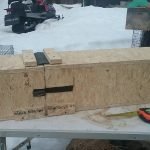
A surprised Manitoba, Canada trapper found a rare cougar in one of his coyote snares last week.  One of only four cougars found in the province since 1973, this discovery has attracted great interest from Wildlife Department scientists.  It is suspected that the cougar may have roamed into the area from North Dakota.

Read more below:

Manitoba Trapper Finds Cougar

Scientists Excited by Rare Cougar Discovery

Pennsylvania Man Successful in First Fisher Trapping Season

January 5, 2011

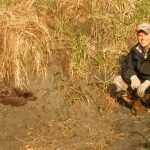
Ron Weller of Macungie, PA with his first fisher

This year, Pennsylvania instituted its first trapping season on fisher in 90 years.  The five day season provided a great opportunity for trappers who were willing to work for it.

Gary Blockus of The Morning Call wrote an article about one of those trappers – Ron Weller of Macungie, PA.  Weller worked hard setting and tending his traps during the five day season, and it paid off with a nice fisher.

Read the full story here.

Minnesota Coyote Trapper Catches Wolf

November 13, 2010

Minnesota Department of Natural Resources

Minnesota Department of Natural Resources

A southeastern Minnesota trapper recently found a surprise while checking his coyote traps.  A gray wolf, somewhat rare to that part of the state, was waiting for him in one of the traps.  After contacting officials with the Minnesota DNR, the wolf was released unharmed.

Read the story here.

The fact that the wolf was released unharmed, while not a surprise, is what can be expected with more wolves moving into areas where they’ve been long since gone.  And it’s also what we can expect from trapping in the New Mexico gray wolf recovery area, which was temporarily banned to complete a study on trapping impacts on wolves.

Wolves have become common in Minnesota, but according to the story, this wolf likely came from a pack in neighboring Wisconsin.

Minnesota has about 3,000 gray wolves, but they typically live and breed in the northern third of the state in the forested region. In 2009, animal welfare groups successfully petitioned a judge to put Midwest gray wolves back on the endangered species list. The Minnesota DNR recently petitioned the U.S. Fish and Wildlife Service to have the animals removed from the list, and the federal agency has until March to make a decision.

Foothold Traps are Humane, Columnist Demonstrates

January 9, 2010

The best way to combat animal rights arguments is with the facts.  Massachusetts outdoor columnist Marc Folco did just that when he demonstrated, on video, what it’s like to get your hand caught in the average foothold animal trap.  Folco showed the public what most trappers already know: these traps are humane!

The same traps demonstrated in the video below were banned in Massachusetts years ago by uneducated voters in a statewide referendum.

Click here to read the full story.

Trapping is an Important Maine Tradition

March 29, 2009

A recent AP article followed Brian Cogill, a traditional Maine beaver trapper, on his trapline this season.  Like approximately 4,000 other trappers in the state, Brian enjoys trapping despite the low fur prices and hard work that’s involved.

Trapping will be challenged again in Maine next month, when the Canada lynx issue will re-surface in a new series of court hearings.

I think you’ll enjoy this story.  You can read it here.

Alaskan Trapline Observations

March 29, 2009

As the end of the trapping season nears, an Alaskan trapper shares the valuable experience gained through observations of critters on the trapline.

You can read this interesting story in today’s Fairbanks Daily News Miner.

Yup, Southerners Sure Do Eat Raccoons!

January 19, 2009

A recent AP article, “What’s For Dinner? How About Raccoon?”, highlights the fact that eating raccoons is a large part of the culture and tradition of many people in the southern U.S.  And it isn’t just about habit, apparently.  Those who eat it regularly say that ‘coon meat is ‘just plain good’!

There are a number of benefits to a culture that embraces eating natural, wild animals as a major part of its diet.

“Raccoon meat is some of the healthiest meat you can eat,” says Jeff Beringer, a furbearer resource biologist with the Missouri Department of Conservation.

“During grad school, my roommate and I ate 32 coons one winter. It was all free, and it was really good. If you think about being green and eating organically, raccoon meat is the ultimate organic food,” with no steroids, no antibiotics, no growth hormones.

In addition, the raccoon meat market helps trappers obtain an added value for the coons that they trap for fur, and raccoon populations remain healthy and relatively disease-free when kept in balance with their habitat via sustained harvest.

In the wild, raccoons typically live five or six years. Populations that grow too dense can be decimated by disease, especially when temperatures drop, Beringer says.

“The animals huddle together, passing on the infections. In the winter, we sometimes have massive die-offs. If we can control the fluctuations in the populations by hunting and trapping, we can have healthier animals.”

The demand for raccoon meat continues to be high in Missouri, and eating varmint meat is apparently on the rise across the pond in Britian as well.  Perhaps a meat market for ‘coons can be developed in other parts of the country?  I’d be willing to try it.

Read the full article here.

Trapper Survives Four Days Stuck Under ATV

January 29, 2008

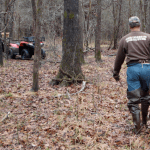
An Alberta trapper survived for four days after a trapline accident left him pinned under his ATV with nothing to eat but rotting beaver meat and with hungry coyotes threatening his life.  He was rescued when a hiker came upon him on the trail and went to get help.  

Read more here 

Wisconsin Trapper Encounters Cougar, DNR Investigates

January 28, 2008

Trapper Kevin Edwardson came face to face with a cougar in a Wisconsin barn last week, in what could be the first confirmed cougar siting in the state in 100 years.  The animal fled from Edwardson after he followed its tracks into the old barn and spotted it in the hayloft.  Its tracks measured 3 1/2″ across and it had a running stride of 12 feet. 

Many cougar sightings have been reported in the state, but none have been confirmed over the past century or so.  DNR Wildlife Biologist Doug Fendry took urine and blood samples from the area, which will be tested to determine the genetics of the cat.  This may allow the state to determine whether this cougar was a captive animal or came from a wild population. 

Read more here

Harvesting ‘Coons For More Than Just Their Fur

January 23, 2008

In Illinois, hunters and trappers can sell the carcasses of raccoons that they capture for fur.  This gives trappers a better return for their effort, allows residents to acquire a healthy source of protein at a very low cost, and helps control the population of critters that abound in suburban areas throughout the state.  Most people who buy the ‘coons are those who grew up in the South where raccoons are eaten regularly, but this food source is also attracting new consumers as well. 

It’s a win-win situation for everyone.  Well….maybe not the animal rights folks, but that’s another story.  Bottom line, raccoon populations are healthy (overpopulation can often causes rabies outbreaks), the economy is better off, and the entire animal is utilized.  The fur is sold to foreign and domestic markets to produce articles of clothing and the meat provides healthy meals for local families.  Sounds like something other states should really consider allowing.

Read more here….

Comments

Bottom