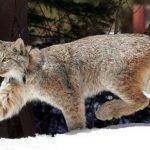
U.S. Fish and Wildlife Reviewing Maine’s ITP Application for Trapping and Lynx
January 2, 2012
The U.S. Fish and Wildlife Service is currently considering an application by the Maine Department of Inland Fisheries and Wildlife for an incidental take permit for Canada lynx. The ITP would provide legal protection for the Department’s trapping program and trappers who incidentally capture lynx, which are protected under the Federal Endangered Species Act. In return, the Department has taken measures to minimize the chances that lynx will be taken in traps, and minimize mortality to lynx that are caught. For the few possible mortalities that could occur, the Department has agreed to provide mitigation to minimize impacts to the lynx population.
The ITP comes on the heels of several lawsuits from animal rights groups to attempt to limit trapping in Maine.
If issued, the Incidental Take Permit would last for a 15 year period.
A brief review of what the document means to Maine’s trapping program can be read by clicking here.
Click here to read the full ITP document.
The USFWS Draft EA can be found here.
The USFWS is accepting public comment on the ITP application through February 7, 2012. Comments can be mailed in or emailed to: hcpmainetrapping@fws.gov
Several public meetings have already been held, but public comment is still being accepted. See the press release below:
News Release Contact:
11/08/2011 USFWS, Meagan Racey, 413-253-8558/413-658-4386
MDIFW, Walter Jakubas, 207-941-4471
Wildlife agencies announce request for lynx permit
Public invited to comment on draft plan for Maine trapping program
The Maine Department of Inland Fisheries and Wildlife has applied to the U.S. Fish and Wildlife Service for a permit to authorize incidental take of federally protected Canada lynx resulting from the state-regulated trapping program.
The Service invites the public to comment on MDIFW’s draft incidental take plan, a requirement for the permit. The Service also invites comment on its draft environment assessment for MDIFW’s application.
The Endangered Species Act makes it illegal to “take”—meaning trap, capture, harass, harm or kill—federally threatened or endangered wildlife, such as the threatened Canada lynx. Some legal activities, such as trapping, have the risk of incidentally taking protected species. An incidental take permit allows for those activities to continue, as long as the permittee undertakes reasonable and practical measures to avoid, minimize and mitigate take of listed species.
“The incidental take permit that MDIFW has applied for should provide assurance to Maine’s trapping community and the general public that trappers can continue to pursue their avocation in northern Maine without detriment to the state’s lynx population,” said Wally Jakubas, MDIFW Mammal Group leader.
Incidental take plans, known also as habitat conservation plans, identify the impacts to wildlife from a project or program; the steps the applicant will take to reduce or compensate for such impacts; what alternative actions were considered; and how conservation efforts will be funded.
“Habitat conservation plans provide frameworks for partnerships in endangered species conservation,” said Paul Phifer, assistant regional director for the Service’s Northeast Region Ecological Services program. “The measures in this plan will help both agencies continue to protect lynx across the state for the benefit of future generations.”
The Service and MDIFW will hold informational sessions on the draft plan and related assessment in December:
December 13 at University of Maine at Presque Isle, 181 Maine Street, Presque Isle, 04769 (Grand Ballroom—Allagash and Aroostook rooms); 207-768-9502
December 14 at Black Bear Inn, 4 Godfrey Drive, Orono, 04473; 207-866-7120
December 15 at University of Southern Maine in Gorham, 37 College Avenue, Gorham, 04038 (Bailey Hall); 207-780-5961
The Service and MDIFW are accepting written comments on the draft plan and environmental assessment through February 7, 2012. After the comment period ends, the Service will determine whether the application meets the permit issuance requirements. Send comments to hcpmainetrapping@fws.gov or to the Service’s Maine Field Office at 17 Godfrey Drive, Suite 2, Orono, Maine 04473. Comments sent through U.S. mail should be postmarked no later than February 7, 2012, to be considered
Click here for a shortened explanation of the highlights of the ITP. You are encouraged to provide comments on the plan. Remember, these can be submitted to hcpmainetrapping@fws.gov.
Reynolds on Lynx and the ESA
February 14, 2011
V. Paul Reynolds, outdoors columnist with Maine’s Lewiston Sun Journal, and editor of the Northwoods Sporting Journal, wrote an engaging column about how the U.S. Endangered Species Act can make criminals of average folks.
William McCoy of Pennsylvania was sentenced to jail time for accidentally killing a Canada lynx in northern Maine and then, out of panic, attempting to cover it up.
As Reynolds points out:
Part of the problem is the Endangered Species Act itself. A “hanging judge” could technically have sent McCoy to a federal jail for six months and fined him $25,000. So Kravchuk can argue that her sentencing of trapper McCoy was reasonable and restrained.
He argues that biologically, the lynx population does not warrant protection under the ESA:
What she and the average citizen may not realize is that the lynx in Maine have substantially recovered to the point where federal protection has been unwarranted for some time now. In truth, the lynx remain federally protected by default: two years ago, the U.S. Fish and Wildlife Service seriously considered delisting the Maine lynx. That never happened, not for biological reasons, but for lack of funding and staff. A U.S. Fish and Wildlife biologist conceded as much during an interview with the Northwoods Sporting Journal.
In other words, the jailing of McCoy is, in effect, the product of governmental dithering and a law that has run amuck. Make no mistake, McCoy should have reported his incidental take of a lynx to authorities, and he should have been slapped with a fine. However, putting him behind bars for his mistake, especially in context of the bureaucratically delayed delisting of lynx, makes no sense at all. Judge Kravchuk’s threat to hand out longer prison terms to victimized ESA “miscreants” like McCoy, further marginalizes the credibility of the Endangered Species Act and, in some ways, raises questions about Judge Kravchuk’s capacity to exercise discretion in her rulings.
Read the column in its entirety here.
More on the Maine Lynx Lawsuit Resolution
November 13, 2010
Here’s the press release from the Maine Department of Inland Fisheries and Wildlife:
First Circuit United States Court of Appeals Upholds Maine’s Trapping Regulations
The First Circuit United States Court of Appeals this week affirmed a lower federal court’s ruling that denied a request from two organizations seeking to permanently enjoin Maine’s trapping regulations. The appeals court agreed that the groups failed to prove that Canada lynx as a species are irreparably harmed under the state’s rules.
The appeals court also took exception with the organizations’ request to change Maine’s regulations or create a working group to further study the issue. The court noted that the groups “expressly disavowed such remedies before the district court” and that such “bait and switch” should be “deplored.”
The written decision by First Circuit United States Court of Appeals Chief Judge Sandra L. Lynch was received by the Office of the Maine Attorney General on Wednesday on behalf of Maine Department of Inland Fisheries and Wildlife Commissioner Roland “Danny” Martin.
Also hearing the appeal were Circuit Judges Michael Boudin and Jeffrey R. Howard.
The request for permanent injunction – Animal Welfare Institute, et al. v. Roland D. Martin, Commissioner of the Maine Department of Inland Fisheries and Wildlife (CV-08-267-B-W) – initially was filed in U.S. District Court in Bangor in August 2008. The Wildlife Alliance of Maine joined AWI as a party to this case.
In November 2009, U.S. District Court Chief Judge John A. Woodcock ruled that there was no evidence that trapping has any detrimental effect on the population of Canada lynx in Maine, and he declined to order the State of Maine to impose any new restrictions on trapping.
The Maine Department of Inland Fisheries and Wildlife and the Office of the Maine Attorney General are pleased that the First Circuit Court of Appeals affirmed the U.S. District Court decision.
“We thank the First Circuit Court of Appeals for its thorough examination of the U.S. District Court’s ruling, and for making the correct decision to uphold it,” said MDIF&W Commissioner Martin. “Wildlife management requires a balance between species protection and population control, and our biologists achieve that balance through research, in-the-field studies and the establishment of rules on legitimate harvesting tools such as trapping. Fortunately, the courts found that legal attempts to undermine biologists’ efforts were inadequate.”
Maine Attorney General Janet Mills added, “Special appreciation goes to Assistant Attorneys General Christopher Taub and Nancy Macirowski for their excellent advocacy both at trial and on appeal. Their arguments recognized the balancing that must take place in these cases and the values of Maine’s outdoor heritage and the interests of Maine’s sportsmen and women that must be weighed against the federal protections of wildlife.”
The Animal Welfare Institute and the Wildlife Alliance of Maine alleged that Maine, by allowing trappers to obtain permits to use foothold traps to catch non-threatened or non-endangered species, violated the federal Endangered Species Act because an individual lynx could incidentally be caught in the traps.
After a six-day hearing, however, Chief Judge Woodcock found that the groups failed to prove Canada lynx suffer serious physical injury from incidental takes in foothold traps, and therefore that the species was not threatened. He recognized that there is no evidence that trapping is having a detrimental effect on the population of Canada lynx in Maine, and declined to order the State of Maine to impose new restrictions on trapping.
Canada lynx are designated as a Threatened Species under the U.S. Endangered Species Act.
In Maine, it is estimated that there are at least 650 breeding adults and at least 1,000 total lynx. The U.S. District Court credited the evidence submitted by the Department regarding the population estimations.
Maine Assistant Attorney General Christopher C. Taub stated that the First Circuit’s decision “is significant because it conclusively establishes in Maine and other states within the court’s jurisdiction that anyone seeking an injunction under the Endangered Species Act must prove not only that the Act is being violated, but that the violation is causing irreparable harm to the species.”
Taub further noted that “compelling expert testimony, especially that of MDIF&W’s former chief wildlife biologist, Dr. Ken Elowe, conclusively established that there is no evidence suggesting that any single Canada lynx has suffered serious physical injury or death as a result of being caught in a foothold trap, much less that the traps pose any risk to the population as whole.”
Skip Trask, executive director of the Maine Trappers Association, an intervener in the lawsuit, called the decision timely and rewarding.
“We knew from day one of this lawsuit that trapping poses not threat to Maine’s healthy lynx population and it’s rewarding to know that some of the most respected federal judges in the land agree with us,” Trask said. “Maine trappers would have been the biggest losers if this lawsuit had been successful. This decision is a huge win for the Department, for Maine trappers and for sportsmen and sportswomen across the country. As we head into the woods this fall to set our traplines, it’s a big relief to know that this unwarranted lawsuit is no longer a threat to our outdoor lifestyle.”
The 2010 general trapping season starts Oct. 31 and closes on Dec. 31, for most allowable species. Maine permits trapping of beaver, bobcat, coyote, fisher, fox, marten, mink, muskrat, opossum, otter, raccoon, red squirrel, skunk and weasel.
Since 1967, MDIF&W has made it illegal to intentionally hunt or trap Canada lynx, including restricting the type, size and placement of traps in Maine.
In 2008, MDIF&W recognized there was a gap in the clarity of its regulations regarding Conibear traps and how it could result in the incidental taking of Canada lynx. The U.S. District Court ordered MDIF&W to establish emergency rules clarifying the intent of Conibear trap restrictions to ensure that Canada lynx would be unlikely to be caught in these types of traps.
The Maine Department of Inland Fisheries and Wildlife Advisory Council approved emergency regulations in two weeks, and those regulations went into effect during the 2008 trapping season.
The vast majority of Canada lynx caught in traps in Maine is not harmed and promptly released back into the wild. Major injuries are rare. Since 1999, only two lynx have been killed by legally set traps. By comparison, 22 lynx have been killed during the same time period after being struck by cars.
For several years, MDIF&W has been working with the U.S. Fish and Wildlife Service to obtain what is known as an incidental take permit to protect the State from any further legal challenges. An incidental take permit allows lawful activities that by happenstance would result in the incidental take of an Endangered or Threatened species.
“Our effort to obtain an incidental take permit will be boosted by the federal Appeals Court ruling, particularly the affirmation that there is no evidence that trapping activity under Maine’s rules has a detrimental impact on Canada lynx,” according to John Boland, MDIF&W Acting Director of Resource Management.
Maine’s trapping laws are outlined in the “State of Maine Hunting and Trapping Laws and Rules” book that is given to hunters and trappers when they purchase a license. It also can be viewed on the Department’s website at www.mefishwildlife.com.
Maine Lynx Lawsuit Resolved
November 11, 2010

Here at TrappingToday, we’ve been following the Maine lynx lawsuit for quite some time. You can find background on the issue by visiting the lynx issues category page here.
It finally appears that we have some closure to the issue and trappers, while having given up a lot in the process, have exited the process victorious over the animal rights activists.
Here’s an update from Skip Trask of the Maine Trappers Association:
Good afternoon – I just received word that the U.S. Court of Appeals for the First Circuit has affirmed in all respects Judge Woodcock’s favorable judgment in the lynx lawsuit. The First Circuit’s opinion is a published opinion and, as a result, is binding law in New England and persuasive precedent in the rest of the country. The opinion makes it clear that plaintiffs seeking an injunction under the federal Endangered Species Act (ESA) must prove irreparable harm to the species and that courts are not required to issue injunctions to end ESA violations (even where plaintiffs prove that a violation has taken place) if plaintiffs fail to show irreparable harm. This is a huge victory for Maine trappers. This bogus lawsuit is no longer hanging over our heads as we start the 2010 trapping season. This decision will make it much harder in the future for the animal fanatics to use the federal ESA to attack trapping, hunting or any other activity that could result in a threatened or endangered species being taken incidentally. I’ll provide more details in the next MTA/MPGA newsletters. Skip
Skip summed it up great. It’s a huge victory and sets some very important precedent for similar lawsuits in the future.
Trapping Supplies Review, Black Bear Blog, and Trapper & Predator Caller blog have also reported on the story.
Trapper Charged With Illegal Lynx Trapping
July 9, 2010
Hefty fines and some serious jail time could be in the future of a Pennsylvania man who reportedly caught a lynx in an illegal set while trapping in northern Maine.
The Bangor Daily News has the story.
In the winter of 2008, Maine was a hotbed of activity on the trapping front (read more here). A lawsuit filed by animal rights activist groups sought to ban many forms of trapping in the state and resulted in major changes to the Maine’s trapping regulations. During that time, it was rumored that lynx were still being caught despite the new regulations and the plaintiffs demanded that the trapping season be suspended. Snowshoe hare populations were low at the time, meaning lynx were very hungry and much more easily trapped. When a lynx was reportedly caught in the Stacyville area, trappers were quick to point out that it was caught in an illegal set, and should not play a part in influencing new regulations. Sure enough, Mr. McCoy’s traps were not set according to the new Maine law, and now he’s paying the price.
Be sure to read the comments section in the Bangor Daily News article. As always, they’re interesting and provide insight from animal rights wacko’s as well as the son of the man charged with the crimes.
Animal Rights Groups Appeal Ruling on Maine Lynx Lawsuit
December 8, 2009
When a federal judge ruled in favor of trappers in the Maine lynx lawsuit last month, there was no doubt that the animal rights groups would be back to contest the case.
I just didn’t think it would happen so soon.
Just last Thursday, the Wildlife Alliance of Maine and the Animal Welfare Institute filed an appeal to the decision in the 1st Circuit Court of Appeals.
Read more background on the lynx lawsuit, and read the Bangor Daily News story on the appeal. It’s always interesting to read the comments on the Bangor Daily News articles as well.
We’ll keep you posted on how things go.
Logging, Lynx and Marten: How Forest Practices Can Influence Furbearer Numbers
November 21, 2009

In a state almost completely covered with trees, forest harvest practices in Maine can seriously influence populations of many of the furbearers that call the Maine woods home.
Two such furbearers, the American marten and Canada lynx, depend on certain forest types for their survival. Lynx need 20-40 year-old successional forest that holds plenty of snowshoe hares (their main prey base), while marten need forest with heavy canopy cover and some thick trees to protect them from predators.
In 1989, the Maine Forest Practices Act, a landmark piece of legislation that was pushed by many environmentalists and conservationists, began the process of fragmenting the state’s northern forest. In simple terms, the act basically limited the size of clear-cuts. This eliminated the large, barren openings in the forest that many environmentalists and members of the public simply didn’t like looking at.
The new restrictions on the size of clear-cuts didn’t reduce the number of trees that were being harvested from the forest, however. It simply began transforming the landscape from one of a few, very large clear-cuts, to a patchwork pattern of numerous small clear-cuts dotting the landscape.

This new landscape that continues to take form in the northern forest is far from ideal for our valuable furbearers like marten and lynx. The large patches of forest that once existed are now plastered with small openings that support less food for lynx and make marten more vulnerable to predators. Further, the once-prevalent large clear-cuts that re-grew into large stands of quality habitat are becoming increasingly rare. And in the long run, this could mean fewer lynx, marten, and other forest dwellers that have similar habitat needs.
As it’s beginning to appear that the highly touted Forest Practices Act may not have been such a great idea after all, and many are working to see if overturned. The Nature Conservancy, among others, is exploring ways to ensure future habitat conditions promote healthy populations of valuable furbearers in northern Maine.
Read the Nature Conservancy story here.
See a recent lynx/clearcut story from the Boston Globe here.
Black Bear Blog on Lynx Lawsuit
November 20, 2009
Here at TrappingToday we broke a story about the Federal Court’s decision supporting trapping in Maine (the Maine Lynx Lawsuit) several days back. More recently, Tom Remington at the Black Bear Blog has put together an interesting analysis on the judge’s ruling, and has uncovered a few notable observations that I hadn’t thought about.
You can read the Black Bear Blog story here.
More on the Maine Lynx Lawsuit
November 12, 2009
Maine Trappers Win Major Court Victory
(Columbus, Ohio) – Trappers in Maine won a major victory as the state’s Federal District Court upheld the state’s trapping practices and blocked the establishment of a precedent that could be used by anti-hunting and anti-trapping groups nationwide.
In 2008, the Animal Welfare Institute and the Wildlife Alliance of Maine filed a lawsuit against the Maine Department of Inland Fisheries and Wildlife (DIFW) seeking a permanent injunction that would have essentially prohibited trapping in the state. The lawsuit claimed that Maine’s trapping regulations violated the Endangered Species Act (ESA) because Canada lynx, a threatened species under the ESA, could be incidentally caught in traps causing “irreparable harm” to the population.
Throughout the case, the U.S. Sportsmen’s Alliance Foundation (USSAF), along with the Maine Trappers’ Association, Fur Takers of America, National Trappers’ Association, and several individual sportsmen, argued that the anti-trapping plaintiffs had to show that Maine’s trapping practices were a threat to the Canada lynx population as a whole. The plaintiffs insisted that harm to one individual lynx was sufficient for the Court to prohibit trapping in the state.
On November 10th, Federal District Court Judge John A. Woodcock, Jr. ruled that Maine’s trapping practices did not irreparably harm the Canada lynx and denied the injunction sought by the anti-trappers. Further, the Judge agreed with the state and the USSAF that “irreparable harm” is harm to a species as a whole and not simply one individual member.
“Although the plaintiffs may appeal the ruling, the Federal Court’s decision is a monumental victory for the trappers in Maine and sets an excellent precedent that will make it harder for the antis to misuse the ESA in their attempts to ban hunting and trapping in other states,” states USSAF Vice President for Government Affairs Rob Sexton.
“We knew the evidence was on our side and are thrilled with outcome,” said Skip Trask, executive director of the Maine Trappers Association. “The USSAF’s legal assistance was invaluable to the favorable outcome.”
Chick Andres, President of the Fur Takers of America commented, “Trappers nationwide should be grateful that the court saw through what the anti’s were trying to do.”
In 2008 the USSAF’s legal arm, the U.S. Sportsmen’s Legal Defense Fund, was granted permission to intervene in the lawsuit. The case came on the heels of similar case, also in Maine, that was settled in late 2007 when the DIFW agreed to restrict trap sizes in areas where Canada lynx exist.
The U.S. Sportsmen’s Alliance Foundation protects and defends America’s wildlife conservation programs and the pursuits – hunting, fishing and trapping – that generate the money to pay for them. The U.S. Sportsmen’s Alliance Foundation is responsible for public education, legal defense and research. Its mission is accomplished through several distinct programs coordinated to provide the most complete defense capability possible. For more information about the U.S. Sportsmen’s Alliance Foundation and its work, call (614) 888-4868 or visit its website, www.ussafoundation.org.
Judge Rules in Favor of Trappers in Maine Lynx Lawsuit
November 11, 2009
The Maine lynx lawsuit has finally reached a conclusion. After over a year of litigation and a six-day trial this past spring and summer, federal judge John Woodcock issued a 30 page ruling yesterday, which put an end to the current efforts of animal rights activists to ban many forms of trapping in northern Maine. Here’s what you need to know:
“The Court denies the Plaintiffs’ request for permanent injunction against the state of Maine’s current trapping regulations because it finds that the Plaintiffs have failed to prove the Canada lynx as a species will suffer irreparable harm if the injunction is not granted.”
The case has a long, drawn out history (you can find more background here), and has resulted in lots of changes in the way trapping is carried out in northern Maine. New trapping regulations have restricted many of the traditional practices Maine trappers have used successfully for years without harming lynx populations. However, these changes may have been necessary to keep from losing the lawsuit.

In the end, the Judge ruled in favor of the testimony of Dr. Ken Elowe, of the Maine Department of Inland Fisheries and Wildlife, rather than the opinions of the animal rights group’s witnesses. Solid scientific information gained through years of lynx research paid off for the Department and for trappers.
Here are a few more excerpts from Judge Woodcock’s ruling:
“Each trapping season, the current state of regulation in Maine has the effect of tolerating the incidental takes of a certain number of lynx, an intolerable state of affairs to animal rights advocates. Twice in the last three years, they have come to federal court seeking declaratory relief and injunctions against Maine laws and regulations.”
“To prevent further incidental takes of Canada lynx, AWI sought the issuance of a permanent injunction against the state of Maine, and in mid-April and late June, 2009, the Court held six days of hearing in which the parties presented exhaustive testimonial and documentary evidence. Following the hearing, AWI expressly asked for injunctive relief that would “(1) prohibit the use of leghold traps on land in the identified lynx WMDs as well as in WMD 7 where . . . lynx have been identified as present and have been trapped; and (2) prohibit the use of killer-type traps with an opening of more than four inches in both ground and elevated sets.”
” To the extent the case has been a battle of the experts, the Court has relied on Dr. Elowe’s testimony over the testimony of both Dr. Paquet and Ms. Fox.”
“The Court finds AWI’s generic evidence and speculative inferences much less convincing than IF&W’s specific records and finds Dr. Elowe’s testimony more convincing than the opinions of either Dr. Paquet or Ms. Fox.”
Maine trappers can finally relax a bit and start trapping without worry that their season could be shut down……at least for the forseeable future. All trappers and outdoorspeople owe a huge debt of gratitude to all of those who worked so hard to fight this lawsuit. As a trapper who started out in northern Maine, I thank you all for your hard work and dedication to the end.


Comments