U.S. Fish and Wildlife Reviewing Maine’s ITP Application for Trapping and Lynx
January 2, 2012
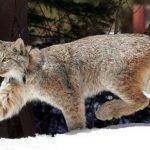
The U.S. Fish and Wildlife Service is currently considering an application by the Maine Department of Inland Fisheries and Wildlife for an incidental take permit for Canada lynx. The ITP would provide legal protection for the Department’s trapping program and trappers who incidentally capture lynx, which are protected under the Federal Endangered Species Act. In return, the Department has taken measures to minimize the chances that lynx will be taken in traps, and minimize mortality to lynx that are caught. For the few possible mortalities that could occur, the Department has agreed to provide mitigation to minimize impacts to the lynx population.
The ITP comes on the heels of several lawsuits from animal rights groups to attempt to limit trapping in Maine.
If issued, the Incidental Take Permit would last for a 15 year period.
A brief review of what the document means to Maine’s trapping program can be read by clicking here.
Click here to read the full ITP document.
The USFWS Draft EA can be found here.
The USFWS is accepting public comment on the ITP application through February 7, 2012. Comments can be mailed in or emailed to: hcpmainetrapping@fws.gov
Several public meetings have already been held, but public comment is still being accepted. See the press release below:
News Release Contact:
11/08/2011 USFWS, Meagan Racey, 413-253-8558/413-658-4386
MDIFW, Walter Jakubas, 207-941-4471
Wildlife agencies announce request for lynx permit
Public invited to comment on draft plan for Maine trapping program
The Maine Department of Inland Fisheries and Wildlife has applied to the U.S. Fish and Wildlife Service for a permit to authorize incidental take of federally protected Canada lynx resulting from the state-regulated trapping program.
The Service invites the public to comment on MDIFW’s draft incidental take plan, a requirement for the permit. The Service also invites comment on its draft environment assessment for MDIFW’s application.
The Endangered Species Act makes it illegal to “take”—meaning trap, capture, harass, harm or kill—federally threatened or endangered wildlife, such as the threatened Canada lynx. Some legal activities, such as trapping, have the risk of incidentally taking protected species. An incidental take permit allows for those activities to continue, as long as the permittee undertakes reasonable and practical measures to avoid, minimize and mitigate take of listed species.
“The incidental take permit that MDIFW has applied for should provide assurance to Maine’s trapping community and the general public that trappers can continue to pursue their avocation in northern Maine without detriment to the state’s lynx population,” said Wally Jakubas, MDIFW Mammal Group leader.
Incidental take plans, known also as habitat conservation plans, identify the impacts to wildlife from a project or program; the steps the applicant will take to reduce or compensate for such impacts; what alternative actions were considered; and how conservation efforts will be funded.
“Habitat conservation plans provide frameworks for partnerships in endangered species conservation,” said Paul Phifer, assistant regional director for the Service’s Northeast Region Ecological Services program. “The measures in this plan will help both agencies continue to protect lynx across the state for the benefit of future generations.”
The Service and MDIFW will hold informational sessions on the draft plan and related assessment in December:
December 13 at University of Maine at Presque Isle, 181 Maine Street, Presque Isle, 04769 (Grand Ballroom—Allagash and Aroostook rooms); 207-768-9502
December 14 at Black Bear Inn, 4 Godfrey Drive, Orono, 04473; 207-866-7120
December 15 at University of Southern Maine in Gorham, 37 College Avenue, Gorham, 04038 (Bailey Hall); 207-780-5961
The Service and MDIFW are accepting written comments on the draft plan and environmental assessment through February 7, 2012. After the comment period ends, the Service will determine whether the application meets the permit issuance requirements. Send comments to hcpmainetrapping@fws.gov or to the Service’s Maine Field Office at 17 Godfrey Drive, Suite 2, Orono, Maine 04473. Comments sent through U.S. mail should be postmarked no later than February 7, 2012, to be considered
Click here for a shortened explanation of the highlights of the ITP. You are encouraged to provide comments on the plan. Remember, these can be submitted to hcpmainetrapping@fws.gov.
Feds Cut Animal Damage Control Programs
September 30, 2011
UPDATE: Looks like the feds will find some money for the program after all. Read the story here.
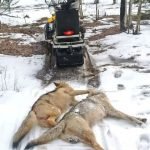
Shortfalls in the federal budget will likely have an impact on animal damage control programs throughout the United States. According to an article in Minnesota’s Duluth News Tribune, the USDA Wildlife Services program that hired government trappers to capture and remove problem wolves will go away due to budget cuts.
The wolves were targeted near where livestock and pets had been killed. And almost everyone who knew about the program — farmers, conservation leaders, wolf lovers, state natural resource officials, Republican and Democratic politicians — liked it.
But with a moratorium on earmarks in Washington, there’s no money assigned to the program after fiscal 2011 ends Friday, when wolf trappers will cease operations. In past years, Minnesota and Wisconsin Congress members routinely used earmarks to preserve the program, which is run by the U.S. Department of Agriculture’s Wildlife Services division.
The animal damage control program wasn’t just popular in Minnesota. Throughout the U.S., the program aided farmers, ranchers and landowners who had problems with animals ranging from coyotes and wolves to beavers and geese.
“We’re losing one of the best wolf conservation tools we’ve had. It was so effective at solving the problem without randomly harming wolves,” said Nancy Gibson, a board member of the Minnesota-based International Wolf Center. “And there was such an educational element. The trappers had so much expertise, I think they really helped the farmers avoid problems.”
Unless the program is funded, the responsibility will rely on states, local communities and private landowners to deal with the problem animals. On the bright side, the absence of the government programs may provide an opportunity for skilled trappers to market their services and take care of animal damage control problems on a local level.
New Mexico Trapping Ban Overturned
July 23, 2011

There’s great news for trappers in New Mexico today. The New Mexico State Game Commission unanimously voted to overturn a ban placed on trapping in the Gray Wolf Recovery Area by Governor Bill Richardson last year.
We reported on the trapping ban a year ago, and noted that a study was underway to determine whether trapping in New Mexico had an impact on the wolf population. While that study has been completed, results have not yet been released to the public. The New Mexico Game and Fish Department had the chance to review the study, and Game and Fish officials recommended that the trapping ban be lifted, presumably based on those results.
Trappers shouldn’t be surprised to see the ban lifted as a result of the study, considering that trapping is used to safely catch and transport wolves in recovery efforts throughout North America. However, we’re all used to regulation decisions being based on politics. This time around, both the science and politics were in favor of trappers in New Mexico. A new governor, elected during the 2010 political swing, had a different view on the trapping issue than did Gov. Richardson.
The animal rights groups are up in arms about the decision, which they had hoped would go the other way, and provide momentum for a statewide trapping ban in New Mexico. Even the AP article by Susan Bryan seemed to be very biased toward animal rights groups. She referred to the animal rights extremist groups as the “conservationists”. Anyone with experience in trapping and wildlife management knows that trappers and wildlife biologists are the real conservationists, as they work to maintain wildlife populations in a healthy balance with humans and nature. A more fitting term to describe the opponents of the decision would be “activists”.
Trappers and wildlife managers have won a victory this time around, and the threat to legal trapping in New Mexico will have to wait.
Muskrat Trapping Extended in Illinois
July 1, 2011
Illinois governor Pat Quinn signed a bill on Tuesday that extends muskrat trapping in the state. Muskrats are found throughout the state, and trapping of the species is regulated by the Illinois Department of Natural Resources.
Congratulations, Illinois trappers! In a time where it seems like trapping rights are constantly being eroded, it’s nice to see new trapping opportunities present themselves. Hopefully trappers can help wildlife biologists in Illinois manage healthy populations of muskrats into the future.
I have a feeling trapping suppliers will soon see a spike in demand for 110 conibears in Illinois!
Trapping Threatened Again in New Mexico
May 21, 2011
Last summer, we covered a story about New Mexico governor Bill Richardson banning trapping in New Mexico’s Gray Wolf Recovery Area.
Then, we noted in November that research was underway to determine the affect of trapping on wolves. Results of that research don’t seem to have surfaced yet, but with a new governor and legislature in the state, Richardson’s ruling could potentially be overturned.
But now we hear that “conservation” groups want to ban trapping on ALL public lands in New Mexico.
Conservation groups want wildlife officials to ban all recreational and commercial trapping on public lands in New Mexico.
The request was made this week despite a recent recommendation that game commissioners reconsider a temporary trapping ban in place in southwestern New Mexico where Mexican gray wolves have been reintroduced. The suggestion came from a small business task force appointed by Gov. Susana Martinez.
You can also find coverage of the story from the Trapper and Predator Caller blog.
Another N.C. County Pushes to Legalize Fox and Coyote Trapping
January 20, 2011

Fox and coyote trapping could soon become legal in Surry County, North Carolina. County commissioners have approved a request to the state legislature to allow the activity.
Similar actions have taken place in Almance and Forsyth counties. North Carolina has statewide trapping regulations, but counties have the ability to open or extend previously closed seasons by working with the state legislature.
Many local residents see the need for trapping to control predatory coyotes and foxes. Trappers are welcoming the new season, which would allow them to help landowners control predator problems where they have thus far been restricted from doing so.
*Update: Rockingham County is looking at making similar changes to their trapping regulations.
Montana Trap Ban Will Not Make Ballot
July 20, 2010
The initiative that could have ended trapping as we know it in the state of Montana will not be on the ballot this November. With the deadline past for supporters of I-160, the effort to ban trapping on public lands in Montana, to gather enough signatures to put the question to the voters in November, signature numbers have fallen short.
Although the animal rights groups came very close to gathering the number of signatures needed to qualify the question for the ballot (20,318 of a needed 24,337), the shortfall signifies that there isn’t enough support (yet) for a ban on traditional trapping practices in the state.
Trappers dodged a bullet this time around, with Montanans for Effective Wildlife Management leading the charge to educate the public on why the trap ban would be a terrible idea. Coming this close to getting the needed signatures, however, means that these groups will most certainly be back, and hopefully Montanans will be ready to fight them off again.
Trapping in Montana is a time honored tradition and a well-regulated wildlife management tool in the state even today. The trap ban would have hindered the ability of Montanans to manage wildlife populations, control predator numbers and prevent animal damage.
A Message from MEWM on the Montana Trap Ban Effort
June 2, 2010
Here’s an update from Montanans for Effective Wildlife Management, the group formed to fight the proposed ballot initiative (I-160) that would ban trapping on all public land in Montana. The initiative supporters still need to collect a large number of signatures for the question to show up on the ballot, but MEWM is being proactive in an effort to get the early word out on I-160 and the impacts it would have on Montanans and others.
MEWM Needs Your Help
As you may have heard, trapping on public land is under attack by animal rights activists.
Montanans for Effective Wildlife Management would like your help in defeating Initiative 160.
We would like to invite you, as a Montana Trappers Association member, to join us in our efforts. We are eager to get the word out to all Montanans.
Initiative 160 will impact the ability to control pests and wildlife on all publicly owned land and facilities in Montana. It is an overly broad initiative with far reaching consequences; it will impact livestock ranchers, farmers, timber growers, home owners, pest control professionals and all those who depend on smart wildlife management methods.
MEWM hopes you will join us in our efforts to defeat I-160. Also, please spread the word by forwarding this email to family, friends, co-workers and others who might be interested in joining our efforts to defeat this overbearing initiative. Our goal is to build a broad base of Montanans who oppose such a heavy-handed, intrusive, initiative. For additional information regarding I-160 you can go to our web site, www.NoOn160.com. Keep an eye out for future newsletters full of useful information and events taking place in a town near you.
Why I-160 is a bad idea…
- This initiative will hurt Montana’s agriculture, ranching and forestry industries by significantly adding to the cost of doing business in Montana.
- I-160 removes an important wildlife management tool from home owners, ranchers, farmers and pest control professionals.
- This initiative will require public employees to conduct all pest control on public land, forcing the state to spend thousands of taxpayer dollars to conduct basic pest control.
- The initiative is so broadly worded, that it would ban the trapping of common pests, like moles and gophers.
Remember…
Initiative 160 would harm Montana’s environment and economy.Trapping is an effective and
trusted wildlife management tool.I-160 does more harm than good to Montanans.
Initiative 160 will waste taxpayer dollars.
What you can do…Do not sign a petition on this initiative; it is bad for the economy and bad for Montanans.
Talk with family, friends and neighbors and ask them to oppose I-160.
Write a letter to the editor of your local paper.
Visit www.NoOn160.com for additional information.
Rocky Mountain Elk Foundation Opposes Montana Trap Ban
April 14, 2010

The Rocky Mountain Elk Foundation, a group dedicated to preserving elk and other game in the Western U.S. and beyond, recently issued a press release opposing I-160. I-160 is a voter initiative that will be on the 2010 ballot, introduced by radical environmentalists who wish to ban all trapping on public lands in the state of Montana.
February 25, 2010 Elk Foundation: Trapping OK, I-160 Not OK MISSOULA, Mont.—Like hunters, trappers play an important role in wildlife conservation and management today. That fact, alongside its general opposition to policymaking via the initiative process, has led the Rocky Mountain Elk Foundation to come out against I-160, which would ban trapping on public lands in Montana. David Allen, RMEF president and CEO, said, “We’ve helped conserve and improve wildlife habitat on over 600,000 acres—most of it public land—in Montana. Many of those acres wouldn’t be open at all to the public if it weren’t for the Rocky Mountain Elk Foundation. We’re deeply invested in Montana public lands and we have absolutely no problem with regulated trapping.”
Allen said I-160 appears to be a backdoor anti-hunting measure backed by out-of-state financiers trying to change Montana values and lifestyles.
He added, “At a time when we’re facing significant impacts from wolves and other predators on elk, deer and livestock, we need to ensure that all of Montana’s management tools remain viable for the future.”
“Initiatives always carry a risk of unintended consequences, but they’re especially concerning when it comes to changing wildlife management policies. The initiative process removes science and opens the door to emotional influences. We believe that wildlife is a resource that deserves to be managed professionally,” said Allen. “RMEF will continue to support conservation professionals, sportsmen and landowners as the best voices in wildlife policymaking.”
About the Rocky Mountain Elk Foundation:
Snowy peaks, dark timber basins and grassy meadows. RMEF is leading an elk country initiative that has conserved or enhanced habitat on over 5.7 million acres—a land area equivalent to a swath three miles wide and stretching along the entire Continental Divide from Canada to Mexico. RMEF also works to open, secure and improve public access for hunting, fishing and other recreation. Get involved at www.rmef.org or 800-CALL ELK.
Kudos to the RMEF. We’ll keep you posted on more I-160 news. I fully expect more groups dedicated to sound wildlife management and agriculture to come to the forefront and publicly oppose the initiative.
The Attempt to Ban Trapping in New Hampshire
February 15, 2010
A new bill introduced to the New Hampshire House of Representatives, is yet another backdoor attempt by animal rights activists to ban trapping.
HB 1514 would essentially eliminate fur trapping by making it illegal to sell the fur of any trapped wild animal in the state. The bill was introduced after an outright trapping ban failed in the 2007 legislative session.
Aside from the New Hampshire trappers the bill would directly impact, many residents are concerned that they will be faced with mounting overpopulation and animal damage problems similar to those experienced by nearby Massachusetts ever since trapping was banned there in 1996.
Let’s hope the “Live Free or Die” state lives up to its name and rejects another animal rights bid.


Comments