Top

ATA Sponsors Fur Handling Clinic

December 22, 2011

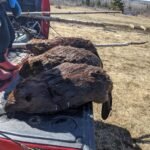
The Alaska Trappers Association recently sponsored a fur handling clinic for trappers in the Fairbanks, AK region.  The clinic was aimed at providing valuable information trappers need to properly skin, flesh, stretch and dry pelts that they capture during the trapping season.

The all-day clinic was designed to teach trappers how to handle fur from the time it is taken from a trap until it is presented to a buyer. Middelstadt, who has been trapping and skinning animals for 40 years, along with Bill Wivoda, owner of Arctic Raw Fur Co., served as instructors for the seven-hour workshop.

Middelstadt and Wivoda first told the class to treat the animals they trap or hunt with respect and to use as much of an animal as possible.

“If you’re going to kill something, treat it correctly and don’t waste it,” Wivoda said.

From there, Middelstadt and Wivoda went on to teach trappers the finer points of skinning, fleshing, stretching and drying the hides of beaver, marten, fox, lynx and wolves.

Click here to read the full story.

Efforts Continue to Limit Trapping in New Mexico

October 14, 2011

Trapping continues to be a controversial topic in New Mexico.  This past summer, we reported on a move by the New Mexico State Game Commission to follow the recommendations of the New Mexico Game and Fish Department to overturn a ban on trapping in New Mexico’s Wolf Recovery Area.

The ban was put in place by former Gov. Bill Richardson in an attempt to protect recovering gray wolves.  After a university study that showed minimal impacts of trapping to wolves, the recommendation was to overturn the ban.

Since the trapping ban was overturned, a group opposed to trapping in New Mexico has been working to ban trapping on public lands in the state.

A recent article in Farmington, New Mexico’s Daily Times tells the tale of one local trapper and the group working to make his activities illegal.

Tom Fisher would like to trap a conservationist just to prove it doesn’t hurt.Fisher uses a KB Compound 5.5 Predator Trap. The device is equipped with shock-spring technology that absorbs the initial wave of panic that sets in when the critter is caught. The trap is loose when animals are relaxed and squeezes when they try to escape.

A trap that doesn’t maul is essential, Fisher said, in order to keep the pastime legal in the state.

…..

“We’re a minority, and these people are trying to railroad us,” Fisher said. “I have a stake in protecting animals as a resource. I don’t want to trap the last one.”

Click here to read the full story.

Trapping Magazines: A Review

October 7, 2011

Like much of the outdoor sporting world, trapping has its fair share of trade publications.  A large percentage of trappers subscribe to trapping magazines to keep up with the latest news, techniques and equipment.  Like most trappers, I wish I had enough money to subscribe to all of the trapping magazines, but I can’t, and you probably can’t either.  So I’d like to help by describing each of the available trapping magazines and what you can expect if you subscribe to them.

Trapper & Predator Caller

The Trapper & Predator Caller is currently the leading magazine in the trapping industry.  Founded in 1975, this magazine was originally called “The Trapper”, but was later changed to add the predator calling element, which only plays a minor role in overall content.  The magazine is published 10 times per year and is offered with membership to most state trapping associations.  As a result, state trappers association presidents’ reports are printed in each issue.

The Trapper & Predator Caller holds a lot of content in its pages.  It’s edited by a real pro and great writer, Jim Spencer.  Parker Dozhier also provides the most comprehensive fur market report available, which includes general market trends as well as detailed regional fur prices.  The magazine has added an online presence recently, with a revamped website, a blog, message boards, and other resources.

If I had anything negative to say about T&PC, the ratio of advertising to overall content is pretty high, meaning you have to wade through quite a few ads while reading the magazine.  Some people don’t mind this though.  Also, the magazine switched formats a few months back and now sports smaller sized pages that I’m not a big fan of.

Overall, Trapper and Predator Caller is a great trapping magazine and if you’re an avid trapper, it’s well worth subscribing to.

$18..95 gets you a 1 year subscription (10 issues).  Discounts are available through most state trappers associations.

Fur-Fish-Game

Of all the magazines that highlight trapping, Fur-Fish-Game has by far the largest circulation.  You can find FFG at almost any news stand across the country.  The difference between it and the other trapping magazines, however, is that Fur-Fish-Game focuses on much more than just trapping.  It covers many other niche hunting and fishing topics that don’t get much attention in the mainstream hunting and fishing magazines.  Depsite this, FFG sports enough trapping-related articles and information to make it worth subscribing to.  In addition to the reader-submitted articles, the magazine also has a monthly fur market report.  It’s only about a page long, but has enough information to keep trappers on top of overall trends in the fur market.

$15.95 buys you a monthly subscription (12 issues per year).


Trapper’s Post

Trapper’s Post is a brand new trapping magazine started by longtime trapper, writer and artist Bob Noonan from Maine.  Some disclosure here, I have to admit that Trapper’s Post is by far my favorite trapping magazine.  It’s been interesting to see a new trapping magazine start from scratch and build up a solid following.

The difference I’ve noticed between Trapper’s Post and other trapping magazines is the format and advertising content.  It’s easy to read and is absolutely packed with content – i.e. trapping stories, interviews and informative articles.  So far, the advertisement space has been kept to the point where it doesn’t interfere with the reading experience.

Since it is only published every two months, Trapper’s Post does not have fur market information that’s as detailed as Trapper & Predator Caller or Fur-Fish-Game.  Instead, it offers a less detailed fur market section that focuses more on general market conditions.

Trapper’s Post features regular columns from some big names in the trapping industry.  Noonan also interviews a noted trapper each month.  Trapper’s Post is starting to offer subscriptions as part of trappers association membership in some states, and is publishing those state reports.  I hope they pick up more state associations, but also wouldn’t like to see the state reports take the place of content.  Again, the thing I like most about TP is the content.  Flip through the pages and you’ll be amazed with the amount of actual trapping articles and information packed into a single issue.

Click here to read an interview I did with Bob Noonan of Trapper’s Post.

$21.95 gets you a bimonthly subscription (6 issues per year).  Discounts are offered to members of some state trappers associations.


The Fur Taker

The Fur Taker is a monthly trapping magazine published for members of Fur Takers of America.  If you have the money, FTA is a great group to join.  They work hard to promote trapping and protect our rights as trappers.  They also offer an annual Trappers College that I’ve heard a lot of good things about.

As far as the magazine, I’ve read it several times over the years.  It’s a good resource for trappers, and is a great benefit for financially supporting a group that supports our trapping heritage.  The circulation and contributors are small, but a lot of sound trapping information can be found here.

FTA membership is $30 annually, which includes 12 issues of The Fur Taker.


American Trapper

American Trapper is also a trapping magazine tied to group membership.  This quarterly publication is sent to members of the National Trappers Association.  The NTA fights hard to protect trapping rights and educate the public about the benefits of trapping.  I’ve read American Trapper off and on over the years.  It’s a great resource, and the benefit of the magazine is just one of many reasons to support the NTA.

NTA membership is $30 annually, which includes four issues of American Trapper.


Trapper’s World

Today’s Trapper’s World magazine is the result of a long history of ups and downs in the trapping publication industry.  Trapper’s World has always been a magazine by trappers and for trappers, but has had financial troubles in the past and is less known than the rest of the trapping magazines on the market.

I know Trapper’s World best for the big name trappers that have written for it in the past.  I’m not sure what the future holds for Trapper’s World, but it might be worth giving the magazine a try.

$19.95 gets you a bimonthly subscription (6 issues per year).


International Trapper

International Trapper magazine is published twice per year by North American Fur Auctions.  The publication is only available to trappers who ship fur to NAFA for sale at auction.  NAFA will deduct $10 each year from your fur check for the subscribtion.  IT is printed on very high quality paper and includes valuable information for trappers, particularly when it comes to fur handling and sales.  Each issue has a theme.

$10 buys an annual subscription (2 issues) for trappers who ship fur to NAFA.


Trap and Trail

Trap and Trail is a small time trapping and hound hunting magazine.  It’s currently in the startup phase, offering bimonthly issues, but the editors are hoping to work their way toward a monthly magazine.  The magazine is looking for stories from trappers and offers a free subscription for submitted stories.  I don’t know much about Trap and Trail, but it might be worth giving it a try.

$15 buys an annual subscription (6 issues).  Article submission or friend referral can get you a free subscription.


Longliner Times

A self-proclaimed underground trapping publication, Longliner Times was put out by the Predator Control Group for ‘hardcore trappers’.  As I understand it, the magazine is no longer running, but back issues are available by visiting the Predator Control Group’s website.


In Conclusion

I hope this overview of trapping magazines available on today’s market is useful for trappers young and old.  Trappers always strive for more information on the trapping industry, and I do my best to provide some of that here on TrappingToday.com  I invite you to take a look at some of the magazines described above, and provide your own input on their value to you as a trapper.

Here’s a recap of the links to each the above trapping magazine websites.

Trapper & Predator Caller

Fur-Fish-Game

Trapper’s Post

The Fur Taker

National Trapper

Trapper’s World

International Trapper

Trap and Trail

Longliner Times


Feds Moving to Delist Wolves in Wyoming

October 6, 2011

The U.S. Fish and Wildlife Service is moving closer to delisting the gray wolf in Wyoming as threatened under the Endangered Species Act.  Wolf populations have expanded significantly in recent years, and wolves have been removed from the ESA list in neighboring Montana and Idaho.

Under an agreement reached in August by Fish and Wildlife officials and Gov. Matt Mead, the state’s roughly 243 wolves living outside Yellowstone National Park and the Wind River Indian Reservation could be killed on sight in all but the northwest part of the state, where they would be designated as trophy game and could only be hunted with a license.

The plan also establishes a flex zone covering northern Sublette and Lincoln counties, as well as southern Teton County, in which wolves would be protected only from Oct. 15 until the end of the following February.

Wyoming would be required to maintain a population of 100 wolves, including 10 breeding pairs, outside Yellowstone and the Wind River reservation.

No hunting or trapping will be allowed in Yellowstone, Grand Teton National Park and the National Elk Refuge under the

proposed rule to be published in the Federal Register.

Feds Cut Animal Damage Control Programs

September 30, 2011

UPDATE: Looks like the feds will find some money for the program after all.  Read the story here.


Shortfalls in the federal budget will likely have an impact on animal damage control programs throughout the United States.  According to an article in Minnesota’s Duluth News Tribune, the USDA Wildlife Services program that hired government trappers to capture and remove problem wolves will go away due to budget cuts.

The wolves were targeted near where livestock and pets had been killed. And almost everyone who knew about the program — farmers, conservation leaders, wolf lovers, state natural resource officials, Republican and Democratic politicians — liked it.

But with a moratorium on earmarks in Washington, there’s no money assigned to the program after fiscal 2011 ends Friday, when wolf trappers will cease operations. In past years, Minnesota and Wisconsin Congress members routinely used earmarks to preserve the program, which is run by the U.S. Department of Agriculture’s Wildlife Services division.

The animal damage control program wasn’t just popular in Minnesota.  Throughout the U.S., the program aided farmers, ranchers and landowners who had problems with animals ranging from coyotes and wolves to beavers and geese.

“We’re losing one of the best wolf conservation tools we’ve had. It was so effective at solving the problem without randomly harming wolves,” said Nancy Gibson, a board member of the Minnesota-based International Wolf Center. “And there was such an educational element. The trappers had so much expertise, I think they really helped the farmers avoid problems.”

Unless the program is funded, the responsibility will rely on states, local communities and private landowners to deal with the problem animals.  On the bright side, the absence of the government programs may provide an opportunity for skilled trappers to market their services and take care of animal damage control problems on a local level.

Some Interesting Tales From Canadian Trappers

September 15, 2011

Philip Rushton of the Whitecourt Star recently interviewed a couple of old timer Canadian trappers who had some interesting tales to tell.

Click here to read the full story.

New Zealand School Program Promotes Possum Trapping

September 11, 2011

Project Possum, a new program offered by a collaboration of New Zealand groups, is promoting possum trapping as a career path for area students.  The program would teach trapping methods and fur preparation and marketing of possum pelts.

Susan Karels, the council’s regional Enviroschools co-ordinator, says the training stems from twin desires to offer participants the chance to earn the NCEA credits, as well as create potential job prospects for young Northlanders

It is also a great opportunity to help control a pest which has a significant impact on the region’s environment.

While giving education credits to students, the program would also jumpstart a pilot project for some students interested in starting their own possum trapping business.

Mrs Karels says once the training is complete, Enviroschools Northland and several students from Te Kura Taumata o Panguru would begin a pilot programme that would see them set up a small business to trap local possums and sell their fur or skins.

The New Zealand Association for Environmental Education had already contributed to the pilot via the purchase of 20 humane possum traps worth about $400 which the students could use until they had paid for them through fur/skin sales.

Depending on the success of the pilot, it could be rolled out to other Northland schools, possibly as early as next year.

I’ve always admired New Zealanders in their management of natural resources.  They have been extremely successful raising and marketing red deer, promoting hunting and fishing for exotic and trophy species, and producing some of the best wool sheep in the world.  Now they’re finding ways to profit from exotic opossums, which are discarded as an essentially worthless commodity in many trapping circles.

Read the full story here.

New Trapping Blog – Northeastern Trapper

September 11, 2011

I’ve been reading Dave M.’s new trapping blog, Northeastern Trapper, for a few months now with interest.  Here’s a description of the blog from Dave’s site:

Welcome to the Northeastern Trapper, THE source for trapping news, information and entertainment in the Northeastern US and Eastern Canada. Over the coming months I’ll be discussing breaking news affecting trappers, new products for the trapline, techniques, trapping heritage and the trapping lifestyle. I’ll focus mostly on trapping in the Northeastern US and Eastern Canada but will include items of interest from across North America and around the World.

Reader comments and guest posts are always welcome!

Sincerely,

Dave M.

In just a short time, Dave has put a lot of time and energy into the site and has been very thorough with his coverage of trapping issues.  Take a look at the site, hope you enjoy it!

http://northeasterntrapper.wordpress.com/

New Mexico Trapping Ban Overturned

July 23, 2011

There’s great news for trappers in New Mexico today.  The New Mexico State Game Commission unanimously voted to overturn a ban placed on trapping in the Gray Wolf Recovery Area by Governor Bill Richardson last year.

We reported on the trapping ban a year ago, and noted that a study was underway to determine whether trapping in New Mexico had an impact on the wolf population.  While that study has been completed, results have not yet been released to the public.  The New Mexico Game and Fish Department had the chance to review the study, and Game and Fish officials recommended that the trapping ban be lifted, presumably based on those results.

Trappers shouldn’t be surprised to see the ban lifted as a result of the study, considering that trapping is used to safely catch and transport wolves in recovery efforts throughout North America.  However, we’re all used to regulation decisions being based on politics.  This time around, both the science and politics were in favor of trappers in New Mexico.  A new governor, elected during the 2010 political swing, had a different view on the trapping issue than did Gov. Richardson.

The animal rights groups are up in arms about the decision, which they had hoped would go the other way, and provide momentum for a statewide trapping ban in New Mexico.  Even the AP article by Susan Bryan seemed to be very biased toward animal rights groups.  She referred to the animal rights extremist groups as the “conservationists”.  Anyone with experience in trapping and wildlife management knows that trappers and wildlife biologists are the real conservationists, as they work to maintain wildlife populations in a healthy balance with humans and nature.  A more fitting term to describe the opponents of the decision would be “activists”.

Trappers and wildlife managers have won a victory this time around, and the threat to legal trapping in New Mexico will have to wait.

Muskrat Trapping Extended in Illinois

July 1, 2011

Illinois governor Pat Quinn signed a bill on Tuesday that extends muskrat trapping in the state.  Muskrats are found throughout the state, and trapping of the species is regulated by the Illinois Department of Natural Resources.

Congratulations, Illinois trappers!  In a time where it seems like trapping rights are constantly being eroded, it’s nice to see new trapping opportunities present themselves.  Hopefully trappers can help wildlife biologists in Illinois manage healthy populations of muskrats into the future.

I have a feeling trapping suppliers will soon see a spike in demand for 110 conibears in Illinois!

« Previous PageNext Page »

Bottom